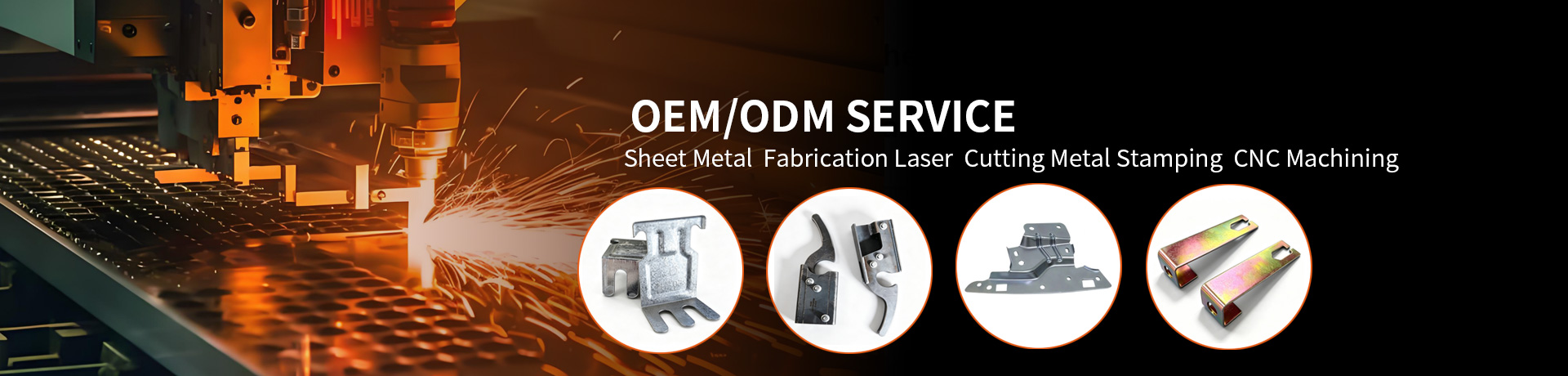
Advantages of Custom Metal Stamping Parts for OEM Projects
Author:yishun Time:2026-08-08 22:00:25 Number of views:104Second-rate

When an OEM design team comes to a metal stamping manufacturer early, the part usually gets cheaper and better at the same time. I have seen custom metal stamping parts cut a customer's landed cost by 40 percent versus their machined baseline, simply because we designed the form for the press instead of against it. The earlier we see the design, the more leverage we have, because stamping rewards geometry that was drawn for the die, not retrofitted to it.
Lower Unit Cost at Volume
The headline advantage of custom metal stamping parts is economy of scale. Once the progressive die exists, a press makes parts at thousands per minute for pennies. A machined bracket might cost $2.40 each; the stamped version drops to $0.30 at 500,000 pieces. A custom stamping supplier amortizes tooling across the run, so the more you build, the more you save. For an OEM shipping millions of assemblies, that delta is the margin.
Tighter Dimensional Control
Custom metal stamping holds ±0.05 mm routinely, ±0.01 mm on critical features, and the stamping manufacturer proves it with Cpk data. That consistency matters when your assembly robots expect every part identical. We map every critical characteristic to an SPC chart so the OEM sees capability, not a promise. A metal stamping parts factory that shares that data becomes a partner in your quality system, not just a vendor on the PO.

Design Freedom Within the Process
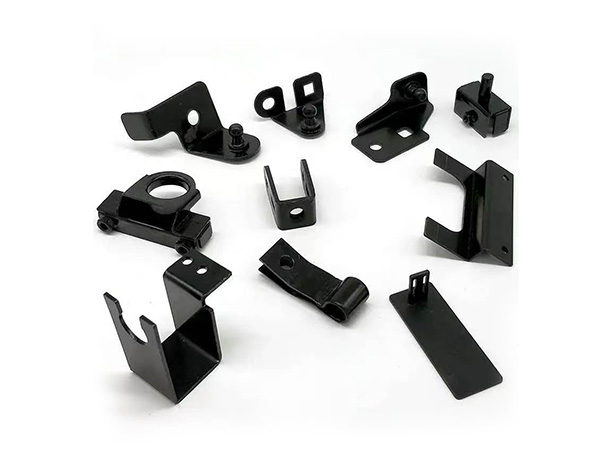
Custom does not mean compromise. Generous radii, embossed stiffeners, and integrated tabs eliminate fasteners and secondary operations. A custom metal stamping part can fold a bracket, pierce the holes, and form a spring tab in one pass, where the old design needed three vendors. The metal stamping supplier who reviews your drawing early will flag a feature that costs nothing to stamp but would be expensive to machine, and that conversation pays back on every unit. It is the difference between a bin of fasteners and a single stamped component that simply works.
Material and Finish Matched to Use
OEM environments vary, under-hood heat, coastal salt, medical cleanrooms. Custom metal stamping parts are specified in the exact alloy and finish the application needs, stainless 316 for corrosion, aluminum 5052 for weight, with plating or passivation to match. A metal stamping manufacturer that controls the supply chain from coil to finish keeps the spec honest from lot one to lot ten thousand, which is what an OEM audit actually checks.
Speed to Scale
When an OEM ramps from prototype to production, a custom stamping supplier is already tooled. First articles in 3 to 5 weeks, then volume in days. Compare that to re-quoting CNC capacity every time the forecast moves. The metal stamping parts program flexes with your build plan instead of bottlenecking it, and that agility is often the reason a launch ships on time.
Traceability and Supply Security
A serious metal stamping parts factory tags every lot to coil heat and die revision, so a field failure traces in minutes. For an OEM, that is recall insurance. Dual-sourcing the same custom metal stamping tooling across two stamping manufacturer sites turns a single-point risk into a managed one, something procurement teams increasingly demand in their supplier agreements. That paper trail is what your quality auditor actually wants to see, long before they care about the unit price.
Conclusion
Custom metal stamping parts give OEM projects lower cost at volume, tighter control, design freedom, material precision, and a clear path to scale. The advantage is not the press, it is the supplier who designs with you from the first sketch. Bring the stamper in early and the part pays you back every unit you ship.
Frequently Asked Questions
Q: When does custom stamping beat machining on cost?
A: Past roughly 5,000 to 10,000 pieces the tooling amortizes and the stamped part usually wins; below that, CNC often stays cheaper per unit.
Q: Can a stamper hold tight tolerance on a custom part?
A: Yes, ±0.05 mm standard and ±0.01 mm on critical features, with Cpk evidence a metal stamping manufacturer should hand you up front.
Q: How early should OEM design involve the supplier?
A: At the drawing stage; a custom stamping supplier reviewing geometry early can remove cost you would otherwise lock into the design.
Q: Is dual-sourcing custom tooling expensive?
A: It doubles first tooling, but it removes a single-point supply risk that can stop a production line, which most OEMs judge worth it.
References
Groover, M. P. (2020). Fundamentals of Modern Manufacturing (7th ed.). Wiley.
Kalpakjian, S., & Schmid, S. R. (2021). Manufacturing Engineering and Technology (8th ed.). Pearson.
Zhang, J., & Liu, D. (2020). Progressive Die Design for Automotive Stamped Parts. Journal of Manufacturing Processes, 56, 1234-1245.
ASM International. (2019). ASM Handbook, Volume 14B: Metalworking: Sheet Forming. ASM International.

- Bazhou Yishun Machinery Parts Co., Ltd
- Contact:Mr Zhao
- Email: ziyangzhao96@gmail.com
- Add: Zhaojiazhuang Village, Bazhou Town, Bazhou City, Langfang City, Hebei Province, China

Copyright © 2026-2027 Bazhou Yishun Machinery Parts Co., Ltd All Rights Reserved