How Industrial Components Improve Construction and Manufacturing Efficiency
Author:yishun Time:2026-09-09 14:29:35 Number of views:189Second-rate
Efficiency in industry rarely comes from a single breakthrough machine. It comes from the thousands of small, well-designed industrial components that let people and automated lines assemble faster, with fewer errors and less waste. A bracket that arrives pre-formed, a wear plate that lasts a season longer, a connector that snaps in without adjustment, these are the quiet drivers of throughput. The cumulative effect across a product or a site is substantial, even when each individual part seems minor. This article looks at how component design and sourcing decisions translate directly into manufacturing and construction efficiency.
What "Industrial Components" Means in Practice
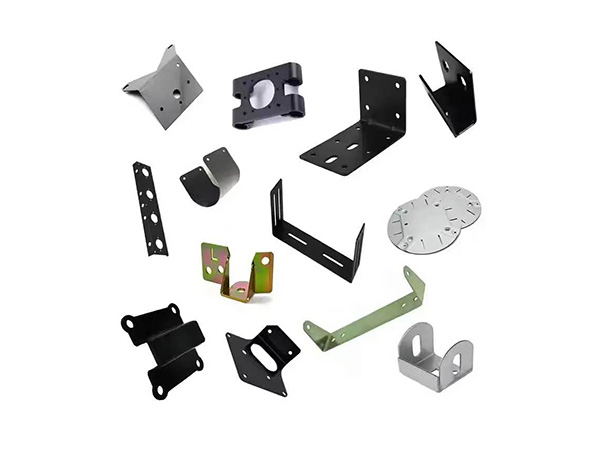
The term covers the non-glamorous parts that hold everything together: stamped brackets, fasteners, cast housings, hydraulic fittings, wear plates, and structural clips. Their job is to be predictable. When a component is specified correctly, the assembly step around it becomes routine; when it is not, the line stops, the crew waits, or the field technician improvises. Efficiency is therefore a property of the component specification as much as the process that uses it.
Standardized vs Custom
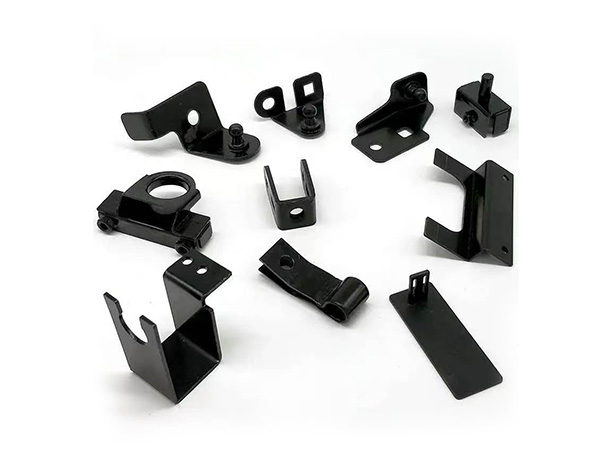
Standard parts, made to a known specification, are cheap, available, and interchangeable. Custom industrial components cost more up front but can remove assembly steps, fasteners, and secondary operations. The efficient choice is usually a mix: standardize where variation adds no value, and customize where a shaped part eliminates work downstream. A metal stamping parts program is a good example, because a custom stamped shape can replace several standard pieces and the labor to join them.
Faster Assembly Through Designed-In Fit
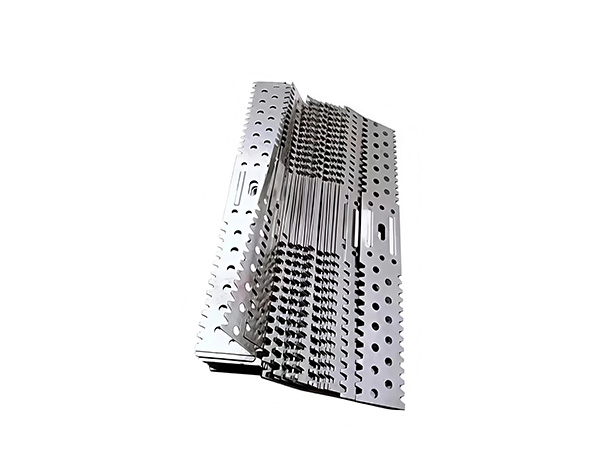
Assembly time scales with the number of operations a human or robot must perform. A component designed with locating features, self-fixturing geometry, and integrated tabs can cut those operations dramatically. In automotive lines, stamped clips and brackets are engineered so a part clicks or welds into place without measuring. The same principle applies on a construction site: a pre-punched ceiling keel or mounting bracket turns a cutting-and-fitting job into a placement job. Designed-in fit is the cheapest speed you can buy.
Lower Cost Through Volume Production
Components made by repeatable processes cost less per unit as volume rises. Stamping, casting, and extrusion all convert material into shape efficiently at scale, which is why they underpin mass production. The unit economics matter because efficiency is not only speed, it is cost per good part.
The Stamping Example
A machined bracket might consume several minutes of spindle time and waste most of the stock as chips. The same metal stamping part made in a progressive die takes a fraction of a second and uses the strip efficiently. At a few thousand pieces, stamping typically becomes the lower-cost route, and the gap widens with volume. Choosing the right production method for the expected quantity is one of the most direct efficiency levers a design team controls.
Consistent Quality and Fewer Defects
Variation is the enemy of efficiency because it forces inspection, rework, and sorting. Well-specified industrial components arrive to a known tolerance, so downstream stations can assume fit. Process-capable suppliers monitor critical characteristics with statistical methods and ship lot traceability, which means a problem is caught as a trend rather than a field failure. The efficiency gain is invisible but real: fewer stops, fewer returns, fewer warranty claims. Each avoided defect prevents the cascade of disassembly, rework, and retest that follows a bad fit.
Simpler Supply Chains
Consolidating many small parts into fewer, better-specified components simplifies purchasing and inventory. A custom metal stamping supplier that delivers a multi-feature part can replace a bill of materials that once listed fasteners, spacers, and plates from three vendors. Fewer purchase orders, fewer receiving inspections, and fewer stock-outs translate into less administrative and production downtime. Supply-chain simplicity is operational efficiency. Fewer vendors also means fewer quality agreements to audit and fewer interfaces where responsibility blurs during a problem.
Efficiency in Construction Assemblies
Construction is slower to industrialize than manufacturing, but the same logic applies. Suspended ceiling grids, modular framing, and pre-fabricated mounting systems all rely on consistent industrial components so that site crews assemble quickly and to spec. When perimeter angles, clips, and runners are dimensionally matched, the grid goes in once and passes inspection; when they are not, the crew re-cuts and re-levels, burning the time the system was meant to save.
Pre-Engineered Systems on Site
The biggest site efficiency gains come from moving work off the job and into the shop. Components that arrive pre-formed, pre-punched, and finished remove cutting, drilling, and coating from the critical path. For heavy equipment like concrete mixer truck parts, the same principle holds: specified wear packages and matched hydraulic kits reduce unplanned downtime and the emergency-ordering scramble that follows a failure.
Heavy-Duty Equipment Reliability
In demanding service, component choice decides whether a machine earns its keep or sits in a bay. Abrasion-resistant wear plates, correctly rated hydraulic seals, and structural steel matched to the load keep equipment running. A fleet running specified concrete mixer truck parts from a supplier that publishes material grades and replacement intervals spends less time broken and more time delivering, which is the clearest efficiency metric there is.
Design for Maintenance
Efficiency extends past first build into the service life. Components designed for easy access, such as clip-in access panels or independently supported fixtures, lower future maintenance labor. Specifying wear parts with predictable life and a documented replacement schedule turns reactive emergency repair into planned downtime. The total cost of ownership, not the first-unit price, is what efficiency-minded buyers should track. Over a fleet or a product line, these small maintenance savings compound into a measurable reduction in lifecycle cost.
Inventory and the Cost of Stock-Outs
A missing component stops the line just as surely as a defective one. Specified, standard industrial components with stable lead times let planners hold less safety stock while still avoiding stoppages. When a custom metal stamping part replaces several standard items, the number of SKUs to monitor drops, which reduces the chance that one forgotten part halts production. The efficiency gain is partly financial, through lower carrying cost, and partly operational, through fewer urgent expedites that disrupt scheduling.
How to Specify Components for Efficiency
Start from the assembly step the component serves and ask what would make that step faster and more reliable. Reduce part count where a custom shape can replace several standard ones. Choose the production process that fits your volume. Require dimensional and material documentation from the supplier. Finally, align the specification with maintenance data so replacement is planned, not reactive. A metal stamping supplier or components partner who engages on these questions early adds more value than one who simply quotes a drawing.
FAQ
Q: Do custom components always improve efficiency?
A: Not always; below certain volumes the tooling cost outweighs the savings. Custom parts pay off when they remove assembly steps or fasteners at meaningful scale.
Q: How do standardized parts help manufacturing speed?
A: They are interchangeable and pre-qualified, so no measuring, fitting, or sorting is needed at the line, which removes variation and stops.
Q: Why does component quality affect total cost?
A: Poor consistency forces inspection, rework, and warranty work; specified, capable components reduce those hidden costs across the product life.
Q: Can construction learn from manufacturing efficiency?
A: Yes, by moving cutting and finishing off-site into pre-engineered, dimensionally matched components that crews simply place and fasten.
Conclusion
Efficiency in manufacturing and construction is built from the component up. The right industrial components shorten assembly, cut cost through appropriate volume production, reduce defects, and simplify the supply chain, while specified wear and structural parts keep heavy equipment running. The practical move is to design components for the step they serve, choose the process that fits volume, and partner with suppliers who document what they ship. For stamped and custom component programs, start a conversation on our metal stamping parts page to align specification with efficiency goals.
References
Groover, M. P. (2020). Fundamentals of Modern Manufacturing (7th ed.). Wiley.
Womack, J. P., & Jones, D. T. (2003). Lean Thinking: Banish Waste and Create Wealth in Your Corporation (2nd ed.). Free Press.
Kalpakjian, S., & Schmid, S. R. (2021). Manufacturing Engineering and Technology (8th ed.). Pearson.
ASM International. (2019). ASM Handbook, Volume 14B: Metalworking: Sheet Forming. ASM International.

- Bazhou Yishun Machinery Parts Co., Ltd
- Contact:Mr Zhao
- Email: ziyangzhao96@gmail.com
- Add: Zhaojiazhuang Village, Bazhou Town, Bazhou City, Langfang City, Hebei Province, China

Copyright © 2026-2027 Bazhou Yishun Machinery Parts Co., Ltd All Rights Reserved