How to adjust ceiling height with suspended keel accessories?
Author:Yishun Time:2026-06-21 14:32:01 Number of views:176Second-rate
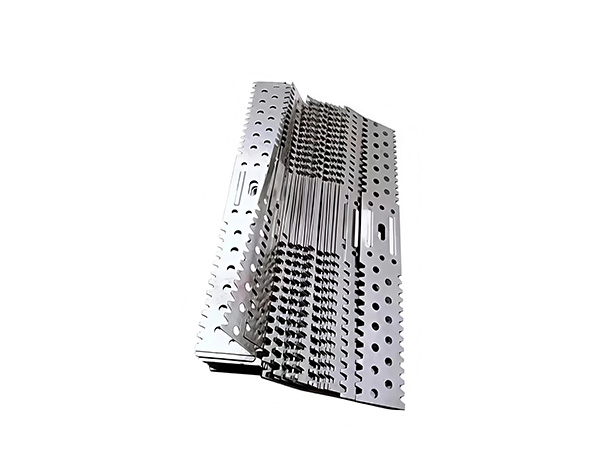
Adjusting ceiling elevation relies entirely on the adjustable structure of suspended keel accessories, mainly threaded suspension rods, double lock nuts and U-shaped hangers. Proper height adjustment ensures uniform horizontal flatness across the whole ceiling, meets design clearance requirements for air-conditioning pipes, wiring and fire sprinklers, and avoids visual slants or uneven panel surfaces. Random height modification without standard steps will create wavy keel grids and hidden structural stress (Salkhordeha & Soroushian, 2025). Below presents complete step-by-step adjustment operations for flat ceilings, multi-layer stepped ceilings and post-installation fine-tuning.
1. Key Adjustable Suspended Keel Accessories & Working Principle
The height adjustment system consists of three core matched parts:
Full-thread suspension rod: Provides long adjustable travel range for overall ceiling lifting or lowering; customizable length according to required drop height.
Double lock nuts (upper nut + lower nut): Clamp the U-hanger tightly from top and bottom. Rotating nuts up or down moves the hanger to change keel elevation.
U-type main runner hanger: Carries the full weight of main keels and transfers height displacement from nuts to the whole ceiling grid.
Additional auxiliary adjustable fittings for special projects: lengthened threaded rods, telescopic suspension assemblies and height-adjustable wall angle brackets for perimeter edge leveling.
2. Pre-adjustment Preparation
Confirm target finished ceiling height from construction drawings, mark a uniform horizontal reference line on surrounding walls using a laser level.
Check all suspension rods have sufficient exposed thread length above and below the hanger to reserve space for upward/downward adjustment (at least 50 mm spare thread on both sides).
Loosen all double lock nuts slightly on every suspension point; do not fully detach the U-hanger from the threaded rod to prevent falling keels.
Prepare adjustable wrench, laser level, measuring tape and rubber mallet for calibration and correction.
3. Step-by-Step Height Adjustment for Standard Flat Ceilings
Step 1: Rough height positioning for all suspension points
Rotate the lower lock nut upward or the upper lock nut downward to move the U-hanger close to the preliminary target height. Keep a small gap between nuts and hanger without full clamping. Complete rough adjustment for all hangers along every main runner.
Step 2: Unified leveling with laser horizontal reference
Turn on the laser level and project a continuous horizontal baseline matching the designed ceiling bottom height.
If keel surface sits higher than the laser line: Rotate both upper and lower lock nuts downward synchronously to lower the U-hanger and main keel.
If keel surface sits lower than the laser line: Rotate both lock nuts upward synchronously to lift the entire keel assembly.
Adjust each suspension point one by one until the bottom edge of all main keels align perfectly with the laser reference.
Step 3: Double-lock fixation after accurate height positioning
Once the elevation meets the standard, hold the U-hanger steady by hand. Tighten the upper lock nut down to press the top of the hanger, then tighten the lower lock nut upward to support the bottom of the hanger. The two nuts form rigid clamping to lock height permanently and eliminate vertical sliding under load.
Step 4: Secondary flatness inspection
Use a 2m straight ruler to cross-check adjacent main runners. If local high-low deviation exceeds ±2mm, re-loosen the double nuts and repeat micro-adjustment until the whole grid stays horizontal.
4. Height Adjustment for Multi-Level Stepped Ceilings
Multi-layer suspended ceilings require independent height adjustment for each tier with separate suspension accessory sets:
Install independent groups of threaded rods and hangers for high and low ceiling layers respectively. Avoid sharing one suspension rod for two elevation planes.
Adjust the higher ceiling tier first, lock its double nuts completely; then adjust the lower stepped section with longer suspension rods to the target drop height.
Equip height-adjustable L-shaped wall angle brackets at tier transition corners to match two different elevations and seal edge gaps neatly.
Use lengthened customized threaded suspension accessories for deep-drop ceiling layers with over 1.2m vertical clearance.
5. Post-installation Fine-Tuning (Ceiling Grid Already Fully Assembled)
If slight sagging or unevenness appears after cross keels are clipped in place:
Clear away obstacles under the sagging area and set up stable ladder access to each suspension point above the defective position.
Loosen upper and lower lock nuts slightly without separating the hanger from the threaded rod.
Lift the main keel manually to the correct horizontal height, then retighten double lock nuts simultaneously.
Add reinforced anti-drop spring clips after readjustment to strengthen fixation.
For large-area overall sagging caused by insufficient suspension rod length: Replace with longer full-thread suspension accessories instead of stacking extra washers as makeshift spacers, which leads to unstable bearing capacity.
6. Critical Operation Rules to Avoid Adjustment Defects
Always rotate upper and lower lock nuts synchronously; only twisting one nut creates unbalanced clamping force and causes hanger tilting.
Do not cut threaded rods after full height locking; reserve spare thread for future maintenance readjustment.
Never use plastic gaskets or thin iron sheets as height fillers between nuts and hangers; these deform under long-term ceiling weight and trigger secondary sagging.
For fire-resistant and seismic ceiling systems, all adjusted suspension accessories must retain full hot-dip galvanized coating; scratch during nut rotation shall be touched up with anti-rust paint.
Suspension rods with vertical drop over 1200mm must add anti-sway limit accessories after height adjustment to stop lateral swing.
7. Application Selection of Adjustable Suspension Accessories
Ordinary office flat ceiling drop ≤1000mm: Standard M6/M8 full-thread rod + regular U-hanger double nut set.
Deep drop multi-layer modeling ceiling drop >1000mm: Custom lengthened threaded suspension keel accessories.
Humid coastal or basement ceilings: 304 stainless steel adjustable suspension kits to prevent thread rust and nut jamming.
Conclusion
Ceiling height adjustment fully depends on the sliding structure of threaded suspension rods and double lock nut matching accessories. The standardized process is loosen double nuts → calibrate elevation against laser horizontal line → synchronously adjust nuts to lift/lower U-hangers → double lock nuts for fixed height. Independent adjustable suspension accessory groups must be configured for multi-level stepped ceilings to ensure separate elevation control. Standardized adjustment eliminates uneven ceiling surfaces and maintains long-term structural stability of the suspended keel framework.
APA 7th
Salkhordeha, M., & Soroushian, S. (2025). Seismic performance of suspended ceiling systems; A literature review. Structural Survey, 43(4), 412–435.
MLA 9th
Salkhordeha, Mojtaba, and Siavash Soroushian. "Seismic Performance of Suspended Ceiling Systems; A Literature Review." Structural Survey, vol. 43, no. 4, 2025, pp. 412–435,
GB/T 7714-2015
[1] SALKHORDEHA M, SOROUSHIAN S. Seismic performance of suspended ceiling systems; A literature review[J]. Structural Survey, 2025, 43(4): 412-435.

- Bazhou Yishun Machinery Parts Co., Ltd
- Contact:Mr Zhao
- Email: ziyangzhao96@gmail.com
- Add: Zhaojiazhuang Village, Bazhou Town, Bazhou City, Langfang City, Hebei Province, China

Copyright © 2026-2027 Bazhou Yishun Machinery Parts Co., Ltd All Rights Reserved