How to fix cross keel with ceiling keel connecting accessories?
Author:Yishun Time:2026-06-21 14:28:46 Number of views:200Second-rate
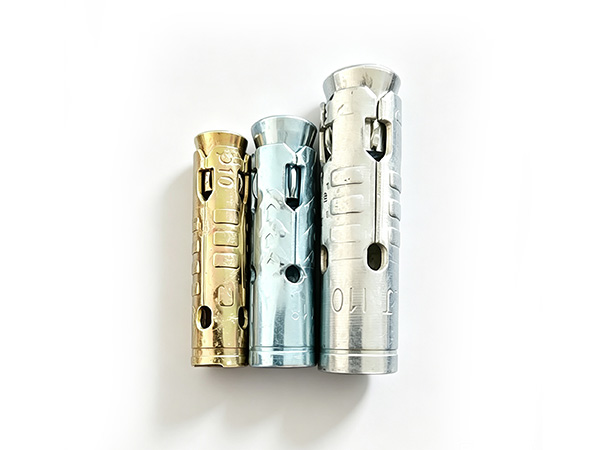
Cross keel connecting accessories, also called furring channel clips or cross tee buckles, are the core fasteners that lock secondary cross keels vertically under main runners to form a complete load-bearing grid for gypsum boards or ceiling tiles. Improper clipping will cause loose cross keels, uneven ceiling surface, board cracking and local sagging under long-term load. The following standardized operation covers preparation, full step-by-step installation, adjustment and reinforcement measures for both concealed light steel keel systems and exposed T-grid ceilings, complying with international ceiling construction standards (Salkhordeha & Soroushian, 2025).
Pre-installation Check & Preparation
Confirm finished main keel suspension: All U-type hangers are locked tightly, main runners are leveled and fixed with double lock nuts, no wobble or height deviation.
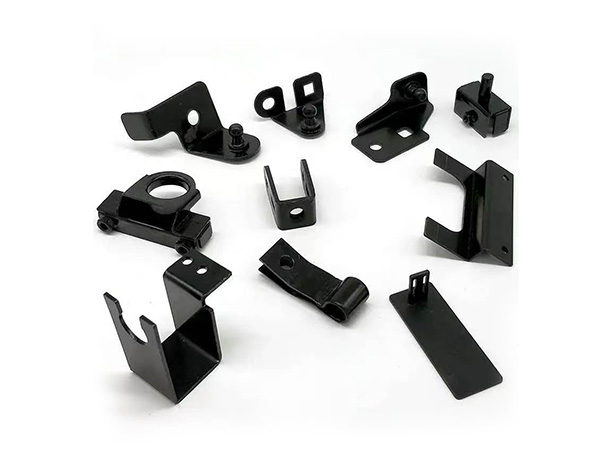
Sort connecting accessories: Standard single lock furring clips, double reinforced clips (for double-layer gypsum boards), cross tee connectors for exposed T-grids. Inspect no deformation, broken springs or peeled galvanized coating.
Mark fixed positions on main runners: Draw tick marks at standard 400mm intervals for concealed gypsum ceilings; 600mm intervals for 600×600 exposed mineral tile ceilings.
Prepare auxiliary tools: Needle-nose pliers, rubber mallet, laser level and measuring tape for flatness correction.
Step 1: Mount cross keel connecting clips onto main runners
Hold one furring channel clip, open the upper spring bayonet slightly by hand or pliers.
Hook the upper clamping slot of the clip onto the bottom flange of the main runner, slide it to the pre-marked position.
Press the spring buckle hard until the clip fully wraps the main runner flange and clicks into locked position; shake lightly to test no sliding left or right.
Repeat to install all clips along every main runner at uniform spacing. For heavy-load zones with embedded lamps or air outlets, add extra clips to narrow spacing to 300mm.
Step 2: Insert cross keel into the lower bayonet of connecting clips
Lift a whole section of cross furring channel and align both ends with the lower opening of corresponding clips on two parallel main runners.
Push the cross keel upward into the bottom clamping slot of each connecting accessory until the keel top surface fits flush against the inner support of the clip.
Use a rubber mallet to tap the cross keel gently if jamming occurs; never use hard steel hammers to avoid bending clips or scratching anti-rust galvanized layers.
Ensure every cross keel is fully seated inside clips without gaps, tilting or partial disengagement.
Step 3: Lock spring fasteners for secondary anti-drop protection
Use needle-nose pliers to squeeze the outer spring tab of each connecting clip inward, forming a double-lock structure to prevent cross keels from slipping down under vibration or thermal expansion.
This spring locking procedure is mandatory for public offices, high-rise and seismic zone buildings to eliminate falling risks.
Visually inspect all connection points; any loose spring clip must be re-clamped or replaced with a new fitting.
Step 4: Splice extended cross keels with joint connectors
When a single cross keel length cannot cover the full ceiling width:
Align two cross keel ends and insert them into both sides of a dedicated cross channel splice connector, with an overlapping length over 30mm.
Fasten the splice accessory and keel with small self-tapping screws to avoid separation after long-term load.
Stagger all cross keel splice joints and avoid arranging multiple joints on one straight line to prevent concentrated stress and grid deformation.
Step 5: Reinforcement for special ceiling conditions
Double-layer fireproof gypsum board ceilings: Replace standard single clips with thickened double-lock reinforced connecting accessories to boost bearing capacity.
Multi-level curved modeling ceilings: Use customized widened connecting clips to fix arc-shaped cross keels and maintain consistent radian.
Large-span ceilings over 4m: Add auxiliary side wall angle brackets at cross keel ends for extra lateral support.
Seismic zone projects: Match seismic anti-sway limit clips at each cross keel connection point to restrict horizontal displacement during shaking.
Step 6: Overall flatness inspection after all cross keels are fixed
Run a laser level across the entire cross keel grid to check uniform horizontal height.
Push each cross keel lightly by hand; qualified installation shows no shaking, bouncing or vertical displacement.
Readjust any misaligned connecting clips and re-lock loose spring tabs before proceeding to gypsum board installation.
Common Installation Errors to Avoid
Skip spring lock tabs: Cross keels may drop after years of temperature change and vibration.
Uneven clip spacing: Creates uneven force distribution, leading to gypsum board cracks.
Incomplete keel insertion into clip slots: Causes local ceiling sagging under panel weight.
Deformed thin electroplated clips: Weak clamping force, easy rust and loosening in humid environments.
Conclusion
The complete fixing process for cross keel with connecting accessories follows a clear sequence: install furring clips on main runners at standard intervals → embed cross keels into lower clip slots → lock spring buckles for safety → splice long cross keels via joint connectors → reinforce heavy-load or seismic areas. Fully locked matched connecting fittings guarantee a rigid, flat and safe ceiling grid that meets commercial building load and seismic codes.
APA 7th
Salkhordeha, M., & Soroushian, S. (2025). Seismic performance of suspended ceiling systems; A literature review. Structural Survey, 43(4), 412–435.
MLA 9th
Salkhordeha, Mojtaba, and Siavash Soroushian. "Seismic Performance of Suspended Ceiling Systems; A Literature Review." Structural Survey, vol. 43, no. 4, 2025, pp. 412–435,
GB/T 7714-2015
SALKHORDEHA M, SOROUSHIAN S. Seismic performance of suspended ceiling systems; A literature review[J]. Structural Survey, 2025, 43(4): 412-435.

- Bazhou Yishun Machinery Parts Co., Ltd
- Contact:Mr Zhao
- Email: ziyangzhao96@gmail.com
- Add: Zhaojiazhuang Village, Bazhou Town, Bazhou City, Langfang City, Hebei Province, China

Copyright © 2026-2027 Bazhou Yishun Machinery Parts Co., Ltd All Rights Reserved