How to remove burrs from precision stamping parts?
Author:Yishun Time:2026-06-17 22:04:57 Number of views:189Second-rate
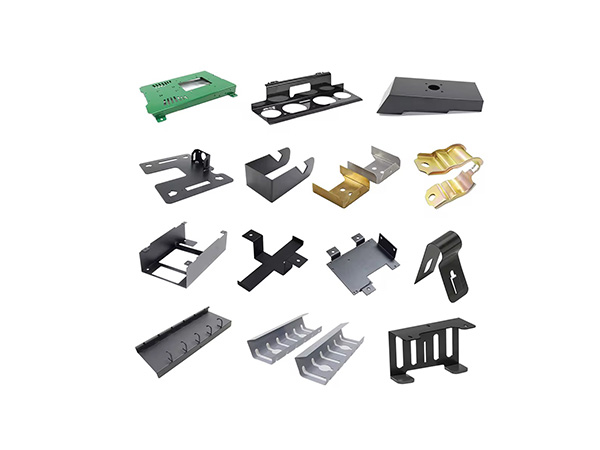
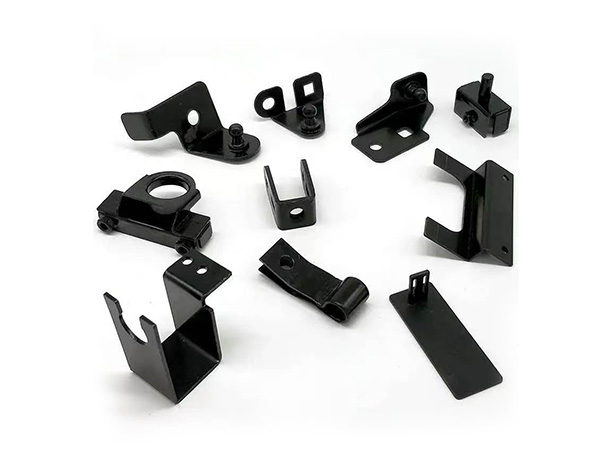
Burrs are residual sharp edges and metal scraps formed at cutting, punching, bending and trimming positions during metal stamping, which affect assembly accuracy, surface safety, dimensional tolerance and subsequent surface treatment of precision stamped components. Different deburring technologies are selected according to part size, material thickness, precision requirement, batch volume and complex structure of precision stamping workpieces. The mainstream mature deburring methods for precision stamping parts are listed as below:
1. Vibratory Tumbling Deburring
This is the most widely used mass-production deburring process for small and medium precision stamped parts such as electronic terminals, connector shrapnels and small hardware brackets. Workpieces are put into vibration barrels together with abrasive stones and grinding liquid. Continuous vibration friction removes tiny burrs while polishing edges uniformly. It features low cost, batch processing capability and no risk of part deformation for thin stamped pieces with proper matching abrasives. It can also realize preliminary surface brightening simultaneously.
2. Magnetic Grinding Deburring
Suitable for tiny thin precision stamping parts with complicated micro holes, tiny slots and irregular inner edges. Magnetic needles move rapidly under alternating magnetic fields to impact and grind burrs in blind holes, narrow gaps and inner corners that manual polishing cannot reach. The whole process causes negligible dimensional loss, which meets the strict tolerance standard of high-precision stamped electronic components.
3. CNC Precision Deburring Milling
Adopted for medium-to-large precision stamped structural parts with thick plates, thick burrs and high flatness requirements. Equipped with tiny high-speed rotary cutters, CNC equipment follows programmed paths to trim burrs at specified contours and edges. The processing accuracy can be controlled within micrometer range, ensuring consistent edge radian and uniform size for mass customized precision stampings.
4. Laser Deburring
A high-end micro-deburring technology for ultra-precision thin stamped parts, ultra-small apertures and fragile alloy stamping components. High-energy laser melts and vaporizes micro burrs instantly without mechanical contact, so there is no mechanical extrusion deformation on thin sheets. It excels at removing burrs from micro holes less than 0.5 mm, widely used in medical and automotive electronic precision stampings.
5. Electrochemical Deburring
Ideal for conductive metal precision stampings with deep narrow grooves and cross holes. Under electrolyte environment, electrochemical corrosion dissolves metal burrs rapidly while the main workpiece surface is protected. It processes hard-to-reach inner burrs efficiently without mechanical stress, especially suitable for stainless steel and alloy steel precision stamping shells.
6. Manual Deburring (Small Batch & Prototype Only)
Operators use diamond files, abrasive strips and sandpaper to polish burrs one by one. It is only applicable for prototype samples, low-volume customized parts or individual complex local burrs. Disadvantages include unstable consistency, low efficiency and high risk of over-grinding which destroys dimensional precision, so it is rarely used in formal mass precision stamping production.
7. Shot Blasting & Sandblasting Deburring
Mainly removes large stamping flash, oxide scales and thick surface burrs. High-speed fine sand or glass beads impact workpiece surfaces to smooth edges. It will form a matte uniform surface after treatment, commonly matched before powder coating or phosphating processes for medium-precision stamped structural parts.
1. GBT National Standard Citation
GB/T 15055-2021, Permissible dimension deviations for stamped parts without specified tolerances[S]. Beijing: China Standards Press, 2021.
2. APA 7th Edition
Sun, T., & Gao, J. (2024). Comparative study of deburring processes for thin-sheet precision stamping components. Journal of Materials Processing Technology, 321, 118142.
3. MLA 9th Edition
Sun, Tao, and Jia Gao. "Comparative Study of Deburring Processes for Thin-Sheet Precision Stamping Components." Journal of Materials Processing Technology, vol. 321, 2024, p. 118142,

- Bazhou Yishun Machinery Parts Co., Ltd
- Contact:Mr Zhao
- Email: ziyangzhao96@gmail.com
- Add: Zhaojiazhuang Village, Bazhou Town, Bazhou City, Langfang City, Hebei Province, China

Copyright © 2026-2027 Bazhou Yishun Machinery Parts Co., Ltd All Rights Reserved