Industries That Depend on Metal Stamping Parts
Author:yishun Time:2026-09-13 16:09:39 Number of views:184Second-rate

Metal stamping turns flat coil or sheet stock into precise, repeatable components at high speed, and that combination of volume, accuracy, and unit cost is exactly what modern industry runs on. When engineers specify metal stamping parts, they are usually solving a problem with expensive consequences: make thousands or millions of identical pieces, hold the tolerance, and keep the piece price low enough that the final product stays competitive. This article walks through the industries that depend on stamped components, what each one asks of the process, and why stamping keeps winning against machining and casting at volume.
What Metal Stamping Parts Actually Are
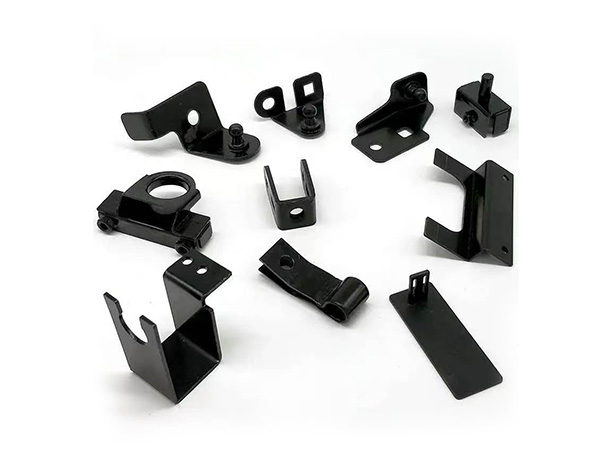
A stamped metal component is produced by feeding strip or sheet through a press where hardened tooling cuts, bends, forms, or draws the material in a single, repeatable action. The work happens in stations: feed, pierce, form, trim, and discharge. In a progressive die, the strip advances a fixed pitch and gains features at each station until a finished metal stamping part drops at the end while the skeleton continues. The result is a part made in fractions of a second, not minutes.
The Processes Behind the Parts
Several processes sit under the stamping umbrella. Progressive die stamping builds complexity station by station and suits high-volume production. Transfer die stamping moves the part between dies for larger components. Deep drawing forms cups and enclosures from flat blanks. Compound dies cut and form in one hit for simpler geometries. The choice depends on part size, material thickness, annual volume, and tolerance, and a capable metal stamping supplier will recommend the route rather than default to the one it owns.

Automotive and Light Vehicle Manufacturing
Automotive is the largest consumer of metal stamping parts by volume. Body structural brackets, seat components, brake shims, fuel and emission hardware, sensor mounts, and countless interior clips are stamped. What the sector demands is consistency at scale: a single vehicle program can call for millions of one bracket per year, and every piece must fit the next assembly station without sorting. Automotive supply chains also expect documented capability, with Cpk values of 1.33 or higher on critical features and full lot traceability back to the coil heat. The economics only work because stamping amortizes tooling across enormous runs. Electrification is now adding stamped busbars and battery enclosures to the mix, pushing volumes higher and tolerances tighter, which keeps stamping central even as powertrains change.
Structural and Safety Components
Safety-related stamped parts, from seat latch plates to airbag housing brackets, carry the strictest requirements. These are where material certification, weldability, and fatigue performance matter more than unit price. A precision stamping manufacturer serving this segment typically runs to IATF 16949 controls and treats every dimension as a documented, monitored characteristic rather than a one-time check.
Aerospace and Defense
Aerospace uses fewer stamped parts by count but demands extreme material discipline. Titanium, nickel alloys, and high-strength steels are formed into brackets, clips, and shielding where weight and certification drive every decision. Tolerances are tight and traceability is non-negotiable. Here, stamping competes with machining, and the deciding factor is often whether the feature can be formed rather than cut; when it can, stamping removes material waste and shortens lead time without sacrificing the documentation aerospace requires.
Electronics and Electrical Connectors
Connectors, terminals, lead frames, and shielding are almost entirely stamped metal components. This sector pushes the process to its precision limit: features measured in tenths of a millimeter, extremely thin stock, and plating tailored to conductivity and corrosion. High-speed stamping lines run thousands of strokes per minute here, and the differentiator is tool accuracy and in-line inspection. A custom metal stamping partner for electronics lives or dies on its ability to hold edge quality on fragile, springy materials like phosphor bronze and beryllium copper.
Medical Devices and Instruments
Surgical instruments, implantable component blanks, and diagnostic hardware rely on stamped parts where biocompatibility and cleanliness matter. Stainless grades are formed into scalpel handles, catheter components, and enclosure clips. The challenge is surface finish and particle control rather than raw volume, and many medical programs run lower quantities with stricter validation. Because lot size is often small, suppliers qualify the process with extensive validation rather than relying on volume to average out variation. Stamping earns its place by producing consistent geometry that downstream finishing can rely on.
Appliances and Consumer Hardware
Household appliances contain dozens of metal stamping parts: motor laminations, brackets, hinges, and fastening clips. This is a cost-sensitive, high-volume world where a fraction of a cent per part multiplies across millions of units. Designs here reward simplicity, because every extra station in the die adds tooling cost that must be recovered across the program life.
Construction and Building Systems
Building hardware, suspension systems, and enclosure components use stamped steel and aluminum for brackets, hangers, and structural clips. The broader construction sector depends on stamped industrial components for speed of assembly and dimensional consistency on site. A bracket that arrives flat, drilled, and bent to spec removes field work and inspection that would otherwise slow a crew.
Energy, Power, and Battery Systems
Electrical infrastructure, solar mounting, and battery enclosures use stamped busbars, cell connectors, and structural frames. As electrification scales, volumes rise and tolerances on conductivity paths tighten. Metal stamping parts fit because they deliver the same cross-section and contact geometry across millions of units, which matters when a battery module's reliability depends on uniform electrical interfaces.
Material and Thickness Considerations by Industry
The material a sector specifies tells you what it is optimizing for. Automotive structural parts lean on high-strength low-alloy steels for crash performance; electronics reach for copper alloys for spring and conductivity; medical and food contact use stainless for corrosion resistance and cleanability. Thickness spans roughly 0.1 mm for lead frames to several millimeters for structural brackets. A metal stamping manufacturer that stocks and processes the relevant alloy range is easier to qualify than one that must source unfamiliar material for your program. Getting the alloy and temper right before tooling is built prevents the expensive correction cycle of re-cutting a die around the wrong springback behavior.
Why Stamping Fits High-Volume Industry
Across every sector above, the logic is the same. Stamping converts material efficiently, holds tolerance repeatably, and drops unit cost as volume climbs. Machining stays the right answer for low quantities, complex three-dimensional features, or very fine surface finish; casting fits large, thick shapes. But for the millions of small, precise, load-bearing pieces industry depends on daily, metal stamping parts are the default. The process is mature, well-understood, and continuously improved through better tool steels, servo presses, and in-line measurement.
FAQ
Q: Which industry uses the most metal stamping parts?
A: Automotive by total volume, followed by electronics and appliances; each relies on stamping for millions of identical, tight-tolerance components per year.
Q: Can stamping meet aerospace and medical standards?
A: Yes, when the supplier provides full material certification, traceability, and process controls; the limitation is feature geometry, not the process itself.
Q: Why not just machine every part?
A: Machining removes most of the starting material as waste and is far slower; stamping wins on cost and material use above a few thousand pieces.
Q: What tolerance can stamping hold?
A: Routine stamping holds roughly ±0.05 mm, with tighter capability possible on critical features using ground tooling and process monitoring.
Conclusion
Metal stamping parts sit inside nearly every manufactured product we use, from vehicles and phones to buildings and batteries. The industries that depend on them share one need: identical components at scale, made accurately and affordably. When specifying stamped parts, match the process and supplier capability to the sector's demands, whether that is automotive volume, medical cleanliness, or aerospace traceability. For sourcing and engineering support on custom metal stamping programs, reach out through our metal stamping parts page to discuss your application.
References
Kalpakjian, S., & Schmid, S. R. (2021). Manufacturing Engineering and Technology (8th ed.). Pearson.
Groover, M. P. (2020). Fundamentals of Modern Manufacturing (7th ed.). Wiley.
ASM International. (2019). ASM Handbook, Volume 14B: Metalworking: Sheet Forming. ASM International.
Zhang, J., & Liu, D. (2020). Progressive Die Design for Automotive Stamped Parts. Journal of Manufacturing Processes, 56, 1234-1245.

- Bazhou Yishun Machinery Parts Co., Ltd
- Contact:Mr Zhao
- Email: ziyangzhao96@gmail.com
- Add: Zhaojiazhuang Village, Bazhou Town, Bazhou City, Langfang City, Hebei Province, China

Copyright © 2026-2027 Bazhou Yishun Machinery Parts Co., Ltd All Rights Reserved