Metal Stamping Parts vs Machined Parts: Key Differences
Author:yishun Time:2026-08-30 21:26:23 Number of views:130Second-rate
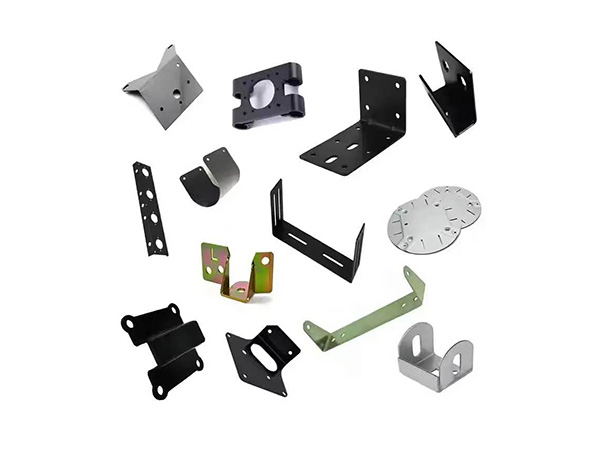
A buyer once told me he wanted machined parts because they "feel more precise." That is not wrong, but it is not the whole story either. After running both processes in a metal stamping parts facility that also machined prototypes, I can give you an honest comparison that does not just sell the press.
Cost at Volume Is Where the Gap Opens
At low quantities, machining wins. A CNC program cuts one part with no tooling cost, while a metal stamping die runs up a $15,000 to $80,000 tooling bill. But at 10,000 pieces, the math flips. A machined bracket at $3.20 each becomes $32,000 total; the metal stamping parts with a $40,000 die amortized over 200,000 pieces drops the unit cost to $0.60. The crossover point on most parts is between 3,000 and 8,000 pieces, and the higher the volume, the wider the gap. A precision stamping manufacturer should show you that crossover on a chart, not just a unit price.
Tolerance and Surface Finish: What Each Process Actually Delivers
Machining routinely holds ±0.01 mm and produces a near-mirror surface finish from a fresh cutter. Metal stamping parts from a fresh die hold ±0.03 to ±0.05 mm as standard and ±0.01 mm on critical features, with a surface that comes off the punch with a light oil sheen. For most structural or enclosure applications, stamped surface finish is entirely adequate. For optics, medical implant surfaces, or fluid passages with Ra demands below 0.8 µm, machining is still the correct answer. Knowing the difference is the difference between an over-specified and an over-priced part.
Lead Time and the Tooling Wait
This is stamping's honest weak point. A machined part is in hand in hours to a few days once the program is written. A metal stamping part needs a die first: 3 to 5 weeks for a simple progressive die, 6 to 10 weeks for a complex multi-stage tool. For a new product launch, that lead time must be in the program schedule from day one. A custom metal stamping supplier who can show you a sample within 48 hours of die approval earns trust that the timeline will hold.
Material Utilization and Waste
Machining removes material to make the shape, leaving 60 to 85 percent of the starting stock as chips. Metal stamping parts remove only the shape from the strip, with scrap rates between 15 and 30 percent for a well-designed nest, and the skeleton is scrap steel, not a waste stream. For aerospace and automotive buyers tracking material efficiency, that difference shows in environmental reporting and in the landed cost calculation. A metal stamping manufacturer with a lean die layout can push scrap below 20 percent on high-volume programs.
Design Complexity and Feature Integration
A single metal stamping pass through a progressive die can pierce, form, bend, emboss, and trim in one pass, integrating what machining would do in three operations across two machines. But stamping cannot produce undercuts, internal threads, or truly three-dimensional cavities. A custom metal stamping shop that offers secondary machining in-house removes that coordination headache for the buyer.
Secondary Operations: When Stamping Needs Help
Threads, inserts, surface treatments, and precision machined features are the common secondary ops on metal stamping parts. A metal stamping parts factory that bundles these as a turnkey package gives you one lead time and one point of accountability, rather than managing four sub-vendors. That consolidation is worth real money on a complex program.
Conclusion
Metal stamping parts beat machined parts on cost at volume, material efficiency, and speed once tooled. Machining wins on lead time, feature complexity, and surface finish below 0.8 Ra. The right choice is not the expensive one or the cheap one; it is the one that fits your volume, your timeline, and your tolerance call. Bring both questions to your metal stamping supplier and let them earn the comparison.
Frequently Asked Questions
Q: At what volume does stamping become cheaper than machining?
A> Generally 3,000 to 8,000 pieces, depending on part complexity and material; above that threshold the tooling amortizes rapidly in stamping's favor.
Q: Can stamped parts hold the same tolerance as machined parts?
A> On most features yes, ±0.03 mm is routine and ±0.01 mm is achievable; very fine surface finishes or sub-0.8 Ra still favor machining.
Q: Does stamping waste more material than machining?
A> No; machining typically wastes 60 to 85 percent as chips, while a well-designed progressive die runs 15 to 25 percent scrap.
Q: How do I handle features stamping cannot produce?
A> Ask your metal stamping supplier about in-house secondary operations; a turnkey package with threading, machining, and finishing is often cheaper than managing multiple vendors.
References
Groover, M. P. (2020). Fundamentals of Modern Manufacturing (7th ed.). Wiley.
Kalpakjian, S., & Schmid, S. R. (2021). Manufacturing Engineering and Technology (8th ed.). Pearson.
ASM International. (2019). ASM Handbook, Volume 14B: Metalworking: Sheet Forming. ASM International.
Ulrich, K. T., & Eppinger, S. D. (2020). Product Design and Development (7th ed.). McGraw-Hill.

- Bazhou Yishun Machinery Parts Co., Ltd
- Contact:Mr Zhao
- Email: ziyangzhao96@gmail.com
- Add: Zhaojiazhuang Village, Bazhou Town, Bazhou City, Langfang City, Hebei Province, China

Copyright © 2026-2027 Bazhou Yishun Machinery Parts Co., Ltd All Rights Reserved