
Stainless steel stamping parts salt spray test standard
Author:Yishun Time:2026-06-17 22:14:05 Number of views:95Second-rate
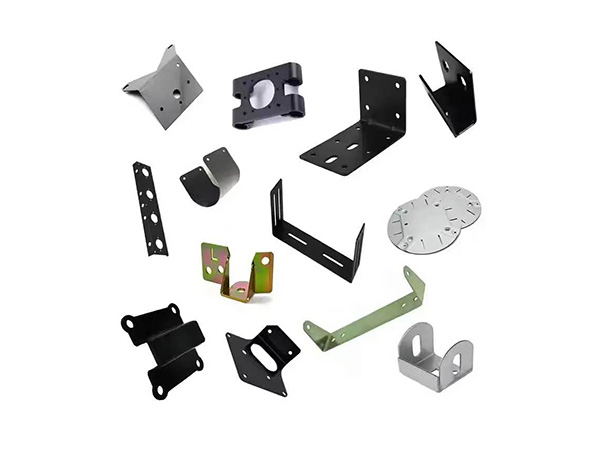
Salt spray testing is a mandatory accelerated corrosion inspection for stainless steel stamped components, used to evaluate pitting resistance, crevice corrosion resistance, passivation film integrity, and anti-rust performance of stamped edges, bending seams and micro slits. Multiple unified domestic and international standards regulate test equipment, solution parameters, operation procedures, specimen placement and result judgment, classified as national GB/T standard, ISO international standard and ASTM American standard. Three mainstream salt spray test types are widely adopted for stainless steel stampings: NSS Neutral Salt Spray, AASS Acetic Acid Salt Spray, and CASS Copper-Accelerated Acetic Acid Salt Spray.
1. Core Universal Standards for Stainless Steel Stamping Parts
(1) Chinese National Standard: GB/T 10125-2021
Equivalent to ISO 9227:2022, the primary domestic standard for all metal stampings including stainless steel. It fully defines NSS, AASS, CASS test conditions, salt fog settlement rate, pH range and post-test evaluation rules, and matches GB/T 30571-2014 technical specifications for cold stamped parts as factory inspection basis.
(2) International Standard: ISO 9227:2022
Global unified salt spray test specification, recognized for export stainless steel stamping products to Europe, Southeast Asia and Middle East markets. Its neutral salt spray parameters are consistent with ASTM B117, ensuring cross-lab data comparability.
(3) American Standard: ASTM B117-26
Neutral salt spray benchmark standard for North American automotive, electronic and hardware stamped parts, widely applied for stainless steel components exported to USA and Canada.
(4) Supplementary Special Standards
GB/T 2423.17-2024: Salt spray test for electrical & electronic stainless steel stamping terminals and connectors
ASTM G44: Guide for salt spray corrosion testing of stainless steel materials
ASTM B368-20: CASS copper accelerated salt spray standard for high-corrosion-resistance stainless steel fittings
2. Key Technical Parameters of Three Salt Spray Test Modes
NSS Neutral Salt Spray (Default for Stainless Steel Stampings)
Most commonly used for routine incoming inspection and mass production quality control
Solution: 5±0.1% sodium chloride distilled water solution, pH=6.5–7.2
Chamber temperature: 35±2℃
Fog settlement rate: 1.0–2.0 mL per 80 cm² per hour
Specimen placement: 15°–30° tilted from vertical plane
Recommended test duration by material:
201 stainless steel stampings (indoor dry environment): 24–48 h no red rust
304 stainless steel (general outdoor, passivated): 72–96 h no pitting
316L stainless steel (coastal/marine equipment): 240–500 h no corrosion spots
Application: Ordinary household hardware, electronic brackets, indoor mechanical stamped parts
AASS Acetic Acid Salt Spray
3 times more corrosive than NSS, simulating acid rain and industrial polluted atmosphere
Solution: 5% NaCl + glacial acetic acid, pH=3.1–3.3, temperature 35±2℃
Usage: Stainless steel stampings for chemical factory equipment, automotive exterior parts exposed to acid contaminants
CASS Copper-Accelerated Acetic Acid Salt Spray
8 times corrosive than neutral salt spray, high-intensity accelerated screening
Solution: 5% NaCl + copper chloride dihydrate + acetic acid, pH=3.1–3.3, test temperature 50±2℃
Usage: Marine stainless steel stamping fasteners, high-end decorative passivated stainless steel shells, rapid batch performance screening
3. Special Test Requirements for Stainless Steel Stamped Components
Stainless steel stampings have unique structural characteristics that add extra test rules beyond basic standards:
All burrs, punching cut edges and bending fracture zones must be retained without polishing before testing; these areas are high-risk corrosion positions of stamped workpieces.
Unpassivated raw stainless steel stampings only support short-cycle NSS testing (2–8 h) to detect free iron contamination on stamping surfaces.
Passivated stainless steel stampings must complete full specified hours without red rust, pitting or white corrosion film on all forming contours, inner holes and folded gaps.
Welded stainless steel stamping assemblies need focused observation of weld seams for localized pitting after salt spray exposure.
4. General Pass/Fail Judgment Criterion
After specified salt spray hours, qualified stainless steel stampings shall meet:
No red rust (iron oxide corrosion) on any stamping surface, edges or holes
No obvious pitting, crater-shaped corrosion damage
Continuous intact passivation film without massive peeling
Minor tiny white passivation film discoloration without substrate exposure is usually acceptable per customer drawing agreement.
1. GBT National Standard Citation
GB/T 10125-2021, Corrosion tests in artificial atmospheres—Salt spray tests[S]. Beijing: China Standards Press, 2021.
2. APA 7th Edition
Li, J., & Wang, H. (2024). Salt spray test standardization and corrosion failure analysis of precision stainless steel stamped parts. Corrosion Science, 217, 111068.
3. MLA 9th Edition
Li, Jia, and Hao Wang. "Salt Spray Test Standardization and Corrosion Failure Analysis of Precision Stainless Steel Stamped Parts." Corrosion Science, vol. 217, 2024, p. 111068,

- Bazhou Yishun Machinery Parts Co., Ltd
- Contact:Mr Zhao
- Email: ziyangzhao96@gmail.com
- Add: Zhaojiazhuang Village, Bazhou Town, Bazhou City, Langfang City, Hebei Province, China

Copyright © 2026-2027 Bazhou Yishun Machinery Parts Co., Ltd All Rights Reserved