Standard spacing for suspended ceiling keel hanging accessories
Author:Yishun Time:2026-06-21 14:26:27 Number of views:140Second-rate
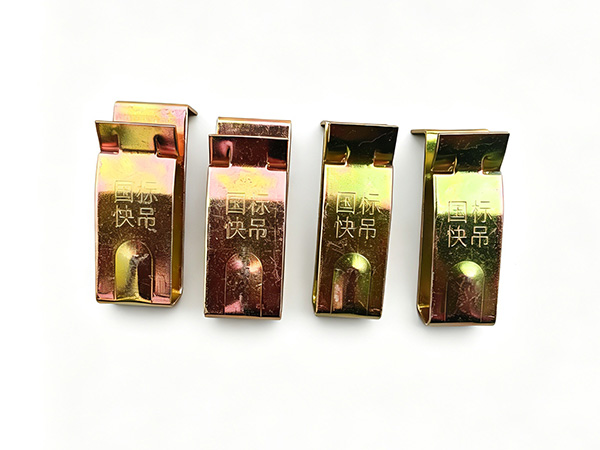
The installation spacing of suspended ceiling hanging accessories directly controls the overall load distribution, flatness and seismic safety of the keel framework. Spacing parameters are classified by ceiling type, fire rating, load weight and seismic zone requirements, following international standards EN 13964, ASTM C635 and IBC building codes. Excessively wide hanger spacing will cause keel bending, ceiling sagging and potential collapse risks, while overly dense layout increases material waste and construction costs (Salkhordeha & Soroushian, 2025). Below lists unified standard spacing specifications for mainstream ceiling systems.
1. Standard Spacing for Concealed Gypsum Board Light Steel Keel Ceiling
This system is widely used for offices, meeting rooms and interior renovation; main runner + furring channel dual-layer grid.
Hanging accessories (threaded rod + U-hanger) spacing
Conventional dry indoor ceiling (single-layer gypsum board, no heavy equipment):
Maximum horizontal spacing between adjacent suspension hangers: 1200 mm
Fire-resistant ceiling (60–120 min fire endurance, high-rise public buildings):
Suspension hanger maximum spacing: 900 mm
Heavy load areas (embedded large LED panels, air ducts, suspended air-conditioning equipment):
Reduce hanger spacing to 600–800 mm; adopt thickened reinforced hangers
Large span ceiling (single span over 4 m): Full layout at 900 mm spacing across the whole area
Cross furring channel clip spacing (secondary keel fixing accessories)
Standard dry space: 400 mm center-to-center
Double-layer fireproof gypsum board: 300 mm center-to-center
Wall perimeter fixing bracket spacing
Normal office ceiling: ≤600 mm
Fire-rated & seismic public building ceiling: ≤500 mm
2. Standard Spacing for Exposed T-Grid Mineral Fiber Ceiling (600×600 tile)
Common for open offices, shopping malls and hospitals with visible T-bar framework
Main tee suspension hanger standard spacing: 1200 mm
Heavy lamp concentrated area: Shorten to 900 mm
Cross tee connecting clip fixed interval: 600 mm matching tile size
Wall angle perimeter fixing spacing: 500–700 mm
3. Special Adjustment Spacing for Seismic Zone Buildings
For areas with mandatory seismic design codes, all hanging accessory spacing shall be reduced, and seismic supporting accessories shall be added additionally:
Suspension hanger maximum spacing: ≤900 mm for all ceiling types
Horizontal seismic lateral support accessories layout: Install bracing brackets every 3.6 m along main runners
Ceiling area over 100 m²: Add transverse seismic supports every 3 m in both horizontal and vertical directions
Suspension rod length exceeding 1200 mm: Must equip anti-sway limit accessories at midpoint of each rod
4. Spacing Restrictions for Multi-Level & Curved Modeling Ceilings
Stepped multi-layer suspended ceiling: All modeling layers adopt 900 mm maximum hanger spacing
Arc/curved special ceiling: Hanger spacing controlled within 800 mm to maintain radian flatness
Corners, recessed light troughs and equipment recesses: Extra suspension hangers at 600 mm intervals for local reinforcement
5. Critical Rules to Follow for Spacing Layout
All suspension points must be arranged in uniform straight grids; staggered irregular placement is prohibited.
The distance from the first suspension hanger to surrounding walls shall not exceed half of the standard hanger spacing.
No suspension point can be placed more than 150 mm away from keel splice joints to avoid stress concentration.
If local hanger spacing exceeds standard values without reinforcement accessories, the ceiling fails engineering acceptance.
Conclusion
1200 mm is the basic universal standard spacing for suspended ceiling keel hanging accessories under ordinary dry, light-load conditions. For fire-rated, seismic, large-span or heavy-load projects, hanger spacing must be reduced to 900 mm or narrower with matched reinforced fittings. Reasonable spacing layout balances structural safety, construction flatness and comprehensive material cost, fully complying with global commercial ceiling engineering specifications.
APA 7th
Salkhordeha, M., & Soroushian, S. (2025). Seismic performance of suspended ceiling systems; A literature review. Structural Survey, 43(4), 412–435.
MLA 9th
Salkhordeha, Mojtaba, and Siavash Soroushian. "Seismic Performance of Suspended Ceiling Systems; A Literature Review." Structural Survey, vol. 43, no. 4, 2025, pp. 412–435,
GB/T 7714-2015
SALKHORDEHA M, SOROUSHIAN S. Seismic performance of suspended ceiling systems; A literature review[J]. Structural Survey, 2025, 43(4): 412-435.

- Bazhou Yishun Machinery Parts Co., Ltd
- Contact:Mr Zhao
- Email: ziyangzhao96@gmail.com
- Add: Zhaojiazhuang Village, Bazhou Town, Bazhou City, Langfang City, Hebei Province, China

Copyright © 2026-2027 Bazhou Yishun Machinery Parts Co., Ltd All Rights Reserved