Common Problems with Suspended Ceiling Keel Accessories and Solutions
Author:yishun Time:2026-08-26 19:27:11 Number of views:144Second-rate

Ceiling call-backs are expensive and embarrassing. I have opened up enough grids to find that three out of four problems started with the same half-dozen root causes in the suspended ceiling keel accessories. Here is the honest list.
Problem 1: Progressive Sag After Installation
Sag that appears three to twelve months after a clean sign-off is almost always a load problem, not a hardware problem. The grid was specced for tile weight, then fixtures, diffusers, and sprinkler drops were added without adding hangers. The ceiling keel carriers carried the tile fine, but the extra 8 to 12 kg per light fixture pushed the system past its rating. The fix is adding dedicated fixture support wires from the structure for each added load. A keel accessories supplier who documents load tables at the spec stage prevents this in advance.
Problem 2: Rust and Corrosion Staining on the Grid
White rust or brown staining on the suspended ceiling keel accessories is common in humid spaces, kitchens, and near pools. Thin G30 galvanized coating blisters in that environment within months. The solution is specifying G60 or heavier at order stage, or aluminum 3003 or 6063 where the environment demands it. A ceiling grid manufacturer that stocks both coatings and can advise on the environment is worth asking before the PO is placed.
Problem 3: Clips That Do Not Engage or Pop Free
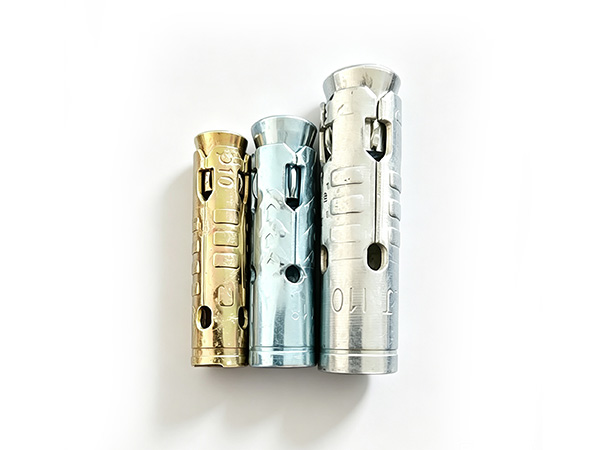
Cross-runner clips that require force to engage or pop loose under normal vibration point to one of two causes: the clip is from a different brand or tolerance band than the runner, or the runner gauge is wrong for the clip. Mixing keel accessories from two ceiling grid manufacturer sources is the most common trigger. The solution is to standardize on one ceiling grid supplier for all accessories on a project. We have pulled mixed batches that appeared identical and found the locking tab dimension off by 0.3 mm, enough to make engagement unreliable.
Problem 4: Misaligned Perimeter and Visible Gaps
Gaps between the wall and the first tile, or a visible step at the wall angle, usually come from a level line that was set without checking the floor above for deflection. If the slab above is newer concrete, it may still be deflecting under its own weight, pulling the perimeter down with it. Before the ceiling keel is installed on a new build, re-verify the level against the structural slab after it has been loaded. A keel accessories factory cannot fix structural movement, but the installer can isolate the grid from it with a flexible perimeter clip.
Problem 5: Squeaking and Rattling After Occupancy
Rattling clips and squeaking runner intersections after a building is occupied are almost always caused by insufficient initial engagement at the splice plates or hangers. The fix is a systematic re-check: every splice plate fully seated, every hanger clip positively locked, and the wall angle seated in its full length before the first cross runner goes in.
Problem 6: Access Panels That Will Not Stay Level
Access panels are the last keel accessories to go in and the first to show sag. The panel frame must be independently supported from the structure, not hung off the grid, and it must be level before the panel itself drops in. Set the access panel height 1 to 2 mm above the surrounding grid plane so any settling stays above the trim line rather than below it.
Conclusion
Most suspended ceiling keel accessory problems trace back to load miscalculation, wrong coating, mixed brands, insufficient structural check, or incomplete engagement. Each is preventable with the right ceiling grid supplier, the right specifications at order stage, and a disciplined install sequence. The call-back avoided is worth more than the spec saved.
Frequently Asked Questions
Q: How do I stop rust forming on a ceiling keel in a pool facility?
A: Specify aluminum 3003 or 6063; if budget requires steel, use G90 galvanized or stainless 304, and avoid G30 which will pit within a season.
Q: Can I mix brands of keel accessories from different ceiling grid manufacturers?
A: Not reliably; minor dimensional differences in locking tabs and clip geometry cause engagement failures even when parts appear identical.
Q: Who is responsible for fixture supports in a suspended ceiling?
A> The ceiling installer, but the mechanical contractor must coordinate fixture weights and positions before the grid is laid; neither should assume the other has done it.
Q: How do I fix a rattle that appeared after the building was occupied?
A> Systematic re-engagement of every splice plate and hanger clip in the affected zone; if it persists, check that the wall angle is fully seated and the perimeter is not deflecting.
References
ASTM C635/C635M-13. (2021). Standard Specification for Manufacture of Metal Ceiling Grid Systems. ASTM International.
ASTM E580/E580M-21. (2021). Standard Practice for Installation of Metal Ceiling Support Systems. ASTM International.
ASCE 7-16. (2017). Minimum Design Loads and Associated Criteria for Buildings and Other Structures. ASCE.
Gyproc, Saint-Gobain. (2022). Suspended Ceiling Installation Guide: Technical Reference Manual. Saint-Gobain.

- Bazhou Yishun Machinery Parts Co., Ltd
- Contact:Mr Zhao
- Email: ziyangzhao96@gmail.com
- Add: Zhaojiazhuang Village, Bazhou Town, Bazhou City, Langfang City, Hebei Province, China

Copyright © 2026-2027 Bazhou Yishun Machinery Parts Co., Ltd All Rights Reserved