What is ceiling keel clip accessories used for?
Author:Yishun Time:2026-06-21 14:43:53 Number of views:96Second-rate
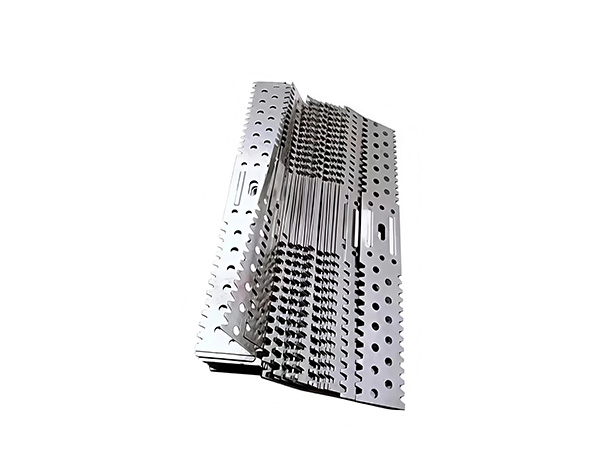
Ceiling keel clips, also named furring channel clips, cross tee clips or grid buckles, are the core connecting fasteners in any metal suspended ceiling keel system. They create a rigid integrated grid by locking main runners and secondary cross keels together, serving as the critical load-transfer medium between upper suspension components and lower ceiling panels. Without matched keel clips, main and cross keels cannot form a stable supporting framework, which will result in uneven ceiling surfaces, local sagging, panel cracking and even collapse risks under long-term static load or vibration (Salkhordeha & Soroushian, 2025). Detailed core functions and application scenarios are explained below.
1. Core Function 1: Connect main keels and cross furring channels to form an integral load-bearing grid
The most fundamental purpose of keel clips is to fasten horizontal secondary cross keels vertically beneath main runners at fixed standard intervals (400mm for gypsum ceilings, 600mm for 600×600 mineral tile T-grids).
The upper bayonet of the clip clamps tightly onto the bottom flange of main runners; the lower slot locks cross furring channels securely.
Every cross keel is fixed by clips on two parallel main runners, turning scattered single keel strips into a continuous mesh structure that evenly distributes the weight of gypsum boards, mineral tiles, lamps and air ducts to overhead suspension hangers and concrete slabs.
Standard single-lock clips are adopted for light-load dry office ceilings, while thickened double-lock reinforced clips are applied for double-layer fireproof gypsum boards and heavy equipment embedded zones to enhance bearing capacity.
2. Core Function 2: Maintain uniform layout spacing and guarantee ceiling flatness
Keel clips are installed at marked fixed positions along main runners to control consistent cross keel spacing.
Uniform clip layout ensures balanced stress distribution on the whole ceiling framework, avoiding partial overloading caused by irregular cross keel intervals.
The integrated clamping structure restricts horizontal and vertical displacement of cross keels, preventing wavy, uneven ceiling surfaces after panels are installed. If clips are omitted or loosely locked, cross keels will shift and sink, leaving visible undulations on finished ceiling surfaces.
3. Core Function 3: Provide anti-drop safety locking protection
Qualified keel clips come with built-in elastic spring tabs as secondary anti-drop locking structures.
After cross keels are inserted into clip slots, manually squeezing the spring tab forms a double-lock mechanism to stop cross keels from slipping down due to thermal expansion, temperature changes, mechanical vibration or minor earthquakes.
This safety design is mandatory for high-rise public buildings, seismic zones and fire-rated ceiling projects to eliminate falling hazards of ceiling panels and keel components. Cheap low-grade clips without elastic springs fail to provide this anti-drop safeguard.
4. Core Function 4: Adapt to different keel series and realize quick modular installation
Keel clips are produced in size-matched models corresponding to mainstream keel specifications, enabling fast on-site assembly without additional drilling or screws:
For concealed gypsum keel systems: D38, D50, D60 series clips fit matching main runner widths and 22/35/68mm cross furring channels.
For exposed T-grid mineral tile ceilings: Special cross tee hook clips connect 15mm/24mm wide-face main tees and cross tees to form standard 600×600/600×1200mm tile grids.
The snap-fit design cuts construction time greatly compared with traditional screw fixing methods, reducing labor costs for large-area commercial ceiling projects.
5. Auxiliary Application Functions
Local reinforcement for heavy-load positions
Extra keel clips are added around embedded large LED panels, air conditioning diffusers and ventilation openings to narrow cross keel spacing and strengthen partial supporting capacity.
Compatibility with multi-layer stepped and curved modeling ceilings
Custom widened and bent keel clips lock arc-shaped cross keels for artistic suspended ceilings, maintaining smooth radian and structural stability of special modeling areas.
Coordinate with seismic accessories for anti-sway performance
When paired with seismic lateral support brackets, locked keel clips limit horizontal sliding of cross keels during shaking, complying with international seismic building codes.
6. Distinction between keel clips for two mainstream ceiling systems
Concealed light steel gypsum ceiling furring clips
U-shaped double-buckle structure, mainly for hidden furring channel fixing, invisible after gypsum board covering.
Exposed T-grid cross tee clips
Hook-type lightweight clips for visible T-bar grids, easy to detach for later maintenance and replacement of mineral fiber ceiling tiles.
Common Consequences of Using Unqualified or Mismatched Keel Clips
Thin electroplated clips lose spring elasticity quickly, leading to loose cross keels and ceiling sagging within 1–3 years.
Size-mismatched clips cannot fully wrap keel flanges, causing partial detachment and uneven panel stress, which triggers gypsum board cracking.
Clips without anti-drop springs pose serious safety risks in public spaces under long-term vibration.
Conclusion
Ceiling keel clip accessories serve as the key connecting medium between main keels and cross keels. Their primary uses include forming an integrated load-bearing ceiling grid, standardizing cross keel layout spacing to guarantee flatness, providing elastic anti-drop safety locking, and supporting fast modular installation for various keel series. Selecting size-matched, thickened galvanized or stainless steel keel clips is essential to ensure long-term stability and safety of suspended ceiling systems in offices, malls, hospitals and other commercial buildings.
APA 7th
Salkhordeha, M., & Soroushian, S. (2025). Seismic performance of suspended ceiling systems; A literature review. Structural Survey, 43(4), 412–435.
MLA 9th
Salkhordeha, Mojtaba, and Siavash Soroushian. "Seismic Performance of Suspended Ceiling Systems; A Literature Review." Structural Survey, vol. 43, no. 4, 2025, pp. 412–435,
GB/T 7714-2015
[1] SALKHORDEHA M, SOROUSHIAN S. Seismic performance of suspended ceiling systems; A literature review[J]. Structural Survey, 2025, 43(4): 412-435.

- Bazhou Yishun Machinery Parts Co., Ltd
- Contact:Mr Zhao
- Email: ziyangzhao96@gmail.com
- Add: Zhaojiazhuang Village, Bazhou Town, Bazhou City, Langfang City, Hebei Province, China

Copyright © 2026-2027 Bazhou Yishun Machinery Parts Co., Ltd All Rights Reserved