What material of suspended ceiling keel accessories is rust-proof?
Author:Yishun Time:2026-06-21 14:08:21 Number of views:117Second-rate
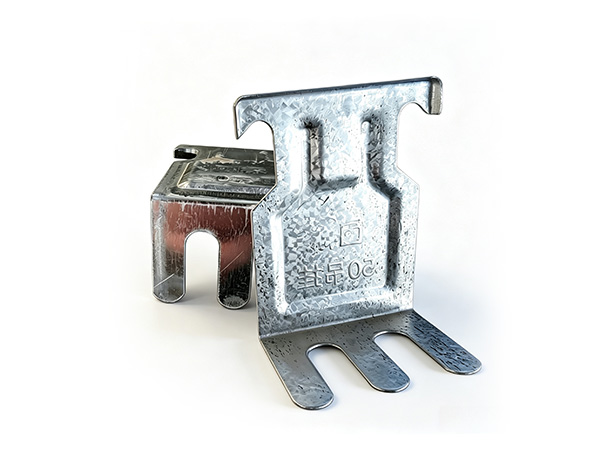
Rust and corrosion are the most common failure problems of suspended ceiling keel accessories, especially in humid offices, shopping malls, bathrooms and underground spaces. Choosing anti-rust raw materials and surface treatments directly determines the service life and structural safety of the ceiling framework. Different metal substrates and anti-corrosion coatings deliver distinct anti-rust performance, which shall be selected according to indoor humidity, temperature and building grade (Salkhordeha & Soroushian, 2025). Below are mainstream rust-proof materials for ceiling keel accessories ranked by anti-corrosion capacity:
1. Stainless steel (top-tier anti-rust material)
304 and 316 stainless steel are the most reliable fully rust-proof materials for keel hangers, clips and connecting fittings. The chromium element inside stainless steel forms a dense passive oxide film on the surface, isolating water vapor, acid mist and condensate water permanently without extra paint coating.
Application scenarios: Swimming pool surrounding ceilings, basement offices, coastal buildings, commercial restrooms and chemical laboratories with high humidity.
Advantages: Zero rust risk, acid and alkali resistant, service life over 30 years.
Disadvantages: Higher raw material cost, mostly used for high-end or special damp projects.
2. Hot-dip galvanized steel (cost-effective mainstream rust-proof material)
Hot-dip galvanized carbon steel is the standard anti-rust choice for general commercial and office ceiling accessories. The accessories are fully soaked in molten zinc at high temperature, forming a thick alloy zinc layer tightly bonded to the steel base. Its anti-corrosion ability is far superior to electroplated zinc.
Application scenarios: Standard open offices, meeting rooms, supermarket ceilings, school corridors with normal humidity.
Advantages: Balanced price and rust resistance, scratch-resistant zinc layer, suitable for large-scale engineering procurement.
Note: Thicker zinc coating brings better anti-rust effect; avoid thin galvanized low-grade products.
3. Pre-galvanized / galvalume steel sheet (light anti-rust material for dry areas)
Galvalume (aluminum-zinc coated) accessories adopt aluminum-zinc alloy coating, combining the oxidation resistance of aluminum and the cathodic protection of zinc. Pre-galvanized steel has a uniform thin zinc layer.
Application scenarios: Dry indoor offices with no air conditioning condensate, indoor dry partition ceilings.
Advantages: Smooth surface, lightweight, easy stamping and forming.
Limitation: Not suitable for long-term humid environments; coating damage during installation will trigger local rust.
4. Electro-galvanized steel (not recommended for long-term anti-rust demand)
Electroplated accessories only form a thin zinc film through electrolysis. The coating is thin and easy to peel off when collided or scratched. Water vapor penetrates quickly and causes rust spots within 1–3 years. It is only allowed for temporary simple decoration and forbidden for permanent office engineering ceilings.
Auxiliary anti-rust treatment matched with metal materials
On the basis of qualified metal substrates, secondary anti-corrosion processes can further upgrade rust resistance: powder coating, epoxy anti-rust paint passivation and sealing treatment. These processes are often applied on wall angle brackets and seismic accessories exposed to air gaps.
Selection Summary
Permanent high-humidity & coastal projects: 304 / 316 stainless steel keel accessories
Conventional commercial office large projects: Hot-dip galvanized steel accessories (first recommendation)
Dry indoor low-budget renovation: Galvalume pre-galvanized accessories
Avoid electro-galvanized accessories for formal building suspended ceilings
APA 7th
Salkhordeha, M., & Soroushian, S. (2025). Seismic performance of suspended ceiling systems; A literature review. Structural Survey, 43(4), 412–435.
MLA 9th
Salkhordeha, Mojtaba, and Siavash Soroushian. "Seismic Performance of Suspended Ceiling Systems; A Literature Review." Structural Survey, vol. 43, no. 4, 2025, pp. 412–435,
GB/T 7714-2015
SALKHORDEHA M, SOROUSHIAN S. Seismic performance of suspended ceiling systems; A literature review[J]. Structural Survey, 2025, 43(4): 412-435.

- Bazhou Yishun Machinery Parts Co., Ltd
- Contact:Mr Zhao
- Email: ziyangzhao96@gmail.com
- Add: Zhaojiazhuang Village, Bazhou Town, Bazhou City, Langfang City, Hebei Province, China

Copyright © 2026-2027 Bazhou Yishun Machinery Parts Co., Ltd All Rights Reserved