Why choose aluminum stamping parts for EV chassis?
Author:Yishun Time:2026-06-17 22:09:29 Number of views:84Second-rate
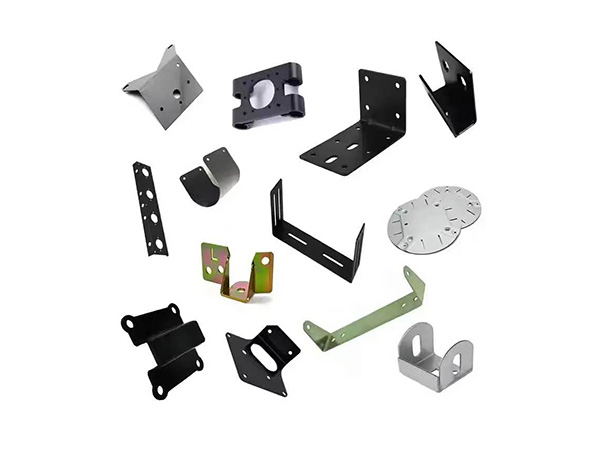
Aluminum stamped components have become the mainstream structural materials for new energy vehicle chassis, widely used in chassis brackets, battery trays, subframes, suspension connecting plates and anti-collision structural parts. Replacing traditional steel stampings with aluminum alloy stampings solves the core pain points of electric vehicles such as heavy curb weight, short cruising range and poor battery safety. The key advantages are analyzed as follows:
1. Dramatic weight reduction to extend driving range
Aluminum density is only one-third of carbon steel. Under the same structural strength, aluminum stamping parts can cut chassis weight by 40%–60%. Lightweight chassis reduces overall vehicle mass, lowers power consumption per kilometer, and significantly lifts pure electric cruising mileage. Meanwhile, lighter chassis reduces the load of power batteries, enabling manufacturers to arrange more battery cells within limited space to further improve endurance performance. Progressive stamping integrates multiple scattered small steel parts into one-piece aluminum structural components, further optimizing lightweight design.
2. Excellent energy absorption & crash safety performance
Aluminum alloy possesses outstanding plastic deformation capacity. When collision occurs, stamped aluminum chassis parts crumple and absorb impact energy efficiently, effectively buffering the force transmitted to the battery pack and passenger compartment. Custom stamped concave-convex energy-absorbing structures on subframes and battery trays disperse collision loads evenly, lowering the risk of battery puncture, short circuit and thermal runaway. Compared with rigid steel, aluminum avoids brittle fracture under violent impact, improving overall passive safety of EVs.
3. Natural corrosion resistance for long service life
Unlike carbon steel that easily rusts after long-term exposure to rain, snow and road salt, aluminum spontaneously forms a dense alumina passivation film on its surface, blocking further oxidation. Aluminum chassis stampings resist erosion from humid environments, deicing salt and mud splashes. Even without complex anti-rust electroplating, they maintain stable structural performance for more than 10 years, reducing later maintenance costs. For battery bottom trays, this property prevents rust penetration and leakage risks.
4. Good forming performance for integrated chassis design
5000-series and 6000-series automotive aluminum alloys have superior ductility, supporting complex stamping processes including blanking, bending, deep drawing, flanging and embossing. Manufacturers adopt large integrated stamping dies to produce large-size one-piece battery trays and chassis cross beams, replacing dozens of welded steel assemblies. Integrated aluminum stampings reduce welding seams, assembly gaps and assembly procedures, improving chassis structural rigidity and production efficiency.
5. Outstanding thermal conductivity to protect batteries
Aluminum has high thermal conductivity. Stamped aluminum battery trays act as heat conduction carriers, evenly transferring heat generated by charging and discharging lithium batteries to external cooling systems. Uniform temperature distribution eliminates local overheating of battery modules, stabilizes battery working temperature, slows capacity attenuation and prolongs battery service life. This thermal management advantage cannot be matched by ordinary steel stampings.
6. High recyclability & low carbon emission
Aluminum features nearly 90% recyclability with low remelting energy consumption. A large amount of scrap generated during aluminum stamping production can be recycled and reused, cutting raw material waste and carbon footprint of vehicle manufacturing. EVs equipped with aluminum chassis meet global low-carbon production and carbon neutrality standards, which also helps auto brands pass environmental certification and reduce carbon tariffs for export vehicles.
7. Lower comprehensive noise & vibration
Aluminum’s unique damping characteristic suppresses road vibration and running noise transmitted from chassis to the car body. Stamped integrated aluminum structures reduce assembly gaps and loose vibration sources, effectively lowering road noise and suspension resonance during driving, and greatly upgrading driving comfort compared with steel chassis.
1. GBT National Standard Citation
GB/T 33824-2017, Aluminum and aluminum alloy sheets and strips for automobile[S]. Beijing: China Standards Press, 2017.
2. APA 7th Edition
Liu, Z., & Huang, Q. (2024). Lightweight application of stamped aluminum alloy components in electric vehicle chassis. Journal of Materials Science & Technology, 170, 124–138.
3. MLA 9th Edition
Liu, Zhe, and Qing Huang. "Lightweight Application of Stamped Aluminum Alloy Components in Electric Vehicle Chassis." Journal of Materials Science & Technology, vol. 170, 2024, pp. 124–138,

- Bazhou Yishun Machinery Parts Co., Ltd
- Contact:Mr Zhao
- Email: ziyangzhao96@gmail.com
- Add: Zhaojiazhuang Village, Bazhou Town, Bazhou City, Langfang City, Hebei Province, China

Copyright © 2026-2027 Bazhou Yishun Machinery Parts Co., Ltd All Rights Reserved