Anti-corrosion treatment for cabinet stamping housings
Author:Yishun Time:2026-06-17 22:26:23 Number of views:135Second-rate
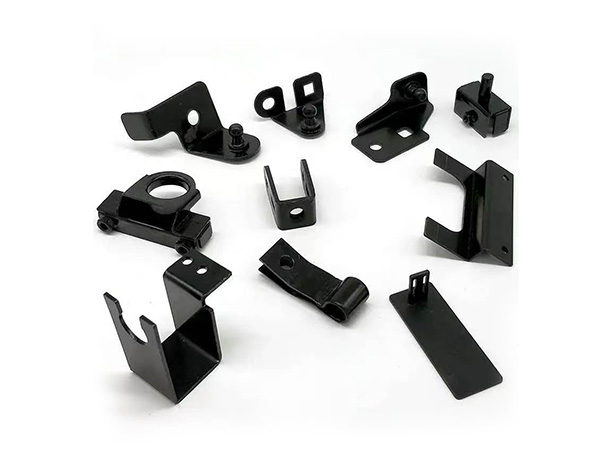
Metal stamped cabinet housings (server cabinets, electrical control cabinets, distribution boxes, outdoor equipment enclosures) are exposed to humidity, dust, acid rain, road salt and industrial corrosive gas during service. Different base materials (cold rolled steel, galvanized steel, aluminum alloy, stainless steel) adopt matched anti-corrosion surface treatments to extend service life, avoid rust penetration and maintain structural integrity. Below are all mainstream mature anti-corrosion processes sorted by material and application scenarios.
1. Anti-corrosion treatments for cold rolled steel cabinet stampings
Cold rolled steel has no inherent rust resistance and requires complete multi-layer anti-corrosion coating systems.
(1) Phosphating + powder coating (most widely used indoor cabinet standard)
Pre-treatment: Degreasing, pickling rust removal, surface adjustment, zinc phosphating to form dense phosphate conversion film.
Electrostatic powder spraying and high-temperature curing to form a thick organic protective layer.
Advantages: Strong adhesion, customizable colors, impact resistance, 500–1000h neutral salt spray resistance.
Application: Indoor electrical cabinets, server cabinet shells, household equipment housings.
(2) Phosphating + liquid paint
Low-cost option for low-demand indoor cabinets; thinner coating, weaker wear resistance than powder coating.
(3) Electro-galvanizing + passivation
Form thin zinc protective layer, followed by blue/color/black chromate passivation to boost anti-rust performance. Suitable for small stamped cabinet brackets and inner frames.
(4) Hot-dip galvanizing
Immerse finished stampings in molten zinc to form thick zinc coating. Over 800h salt spray resistance, specially for outdoor large distribution cabinet housings working in coastal and industrial corrosive areas.
2. Anti-corrosion optimization for galvanized steel stampings
Galvanized substrates already have zinc anti-rust layer; treatment focuses on repairing stamping cut edges and improving coating adhesion:
Chromate passivation: Seal tiny gaps of zinc layer, prevent white rust generation on stamped edges.
Special zinc-based primer + topcoat: Conventional paint easily peels off zinc surface; dedicated primer ensures coating bonding for outdoor cabinets.
Sealing treatment: Add anti-corrosion sealing film after passivation for humid workshop environments.
3. Anti-corrosion treatment for aluminum alloy cabinet stampings (server & communication cabinets)
Aluminum naturally generates alumina film, but stamped cutting edges still need reinforcement:
(1) Anodizing (hard / ordinary color anodizing)
Electrochemically grow dense alumina film on surface; black, silver, grey optional. Excellent wear and corrosion resistance, 300–800h salt spray test pass. Widely used for high-end aluminum server cabinet panels.
(2) Chemical passivation
Low-cost thin protective film for internal aluminum brackets, no obvious change of metal appearance.
(3) Sandblasting + powder coating
For large outdoor aluminum equipment cabinets; matte texture plus dual anti-corrosion protection.
4. Anti-corrosion process for stainless steel cabinet stampings (304 / 316L)
Stainless steel owns natural anti-rust capacity; treatment mainly removes free iron contamination from stamping cutting:
Stainless steel passivation: Dissolve surface iron impurities to restore uniform chromium-rich passive film, avoid point rust on punching edges.
Electropolishing: Smooth surface, enhance anti-corrosion and decorative effect for precision instrument cabinets.
Sealing agent coating: Extra protection for coastal 316L stainless steel enclosures.
5. Special high-grade anti-corrosion treatment for harsh environments
E-coat (electrodeposition coating): Uniform thin film covering complex stamping inner cavities, ideal for multi-layer integrated cabinet housings with deep folded structures.
PTFE anti-corrosion coating: Acid, alkali and salt resistant, used for chemical plant control cabinets.
Zinc-rich epoxy primer + polyurethane topcoat: Heavy-duty three-layer anti-corrosion system for outdoor municipal equipment cabinets, salt spray over 1500 hours.
6. Standard process flow for full anti-corrosion of steel cabinet stampings
Raw stamping → deburring → degreasing cleaning → rust removal → surface conditioning → conversion film treatment (phosphating/passivation) → drying → surface coating (powder/paint/plating) → curing/sealing → finished anti-corrosion housing.
1. GBT National Standard Citation
GB/T 30571-2014, General technical specifications for metal cold stamping parts[S]. Beijing: China Standards Press, 2014.
2. APA 7th Edition
Liu, H., & Zeng, W. (2024). Selection and process control of anti-corrosion finishing for stamped metal cabinet enclosures. Surface and Coatings Technology, 478, 130312.
3. MLA 9th Edition
Liu, Hao, and Wei Zeng. "Selection and Process Control of Anti-Corrosion Finishing for Stamped Metal Cabinet Enclosures." Surface and Coatings Technology, vol. 478, 2024, p. 130312,

- Bazhou Yishun Machinery Parts Co., Ltd
- Contact:Mr Zhao
- Email: ziyangzhao96@gmail.com
- Add: Zhaojiazhuang Village, Bazhou Town, Bazhou City, Langfang City, Hebei Province, China

Copyright © 2026-2027 Bazhou Yishun Machinery Parts Co., Ltd All Rights Reserved