Can aluminum alloy make server chassis stampings?
Author:Yishun Time:2026-06-17 22:25:08 Number of views:83Second-rate
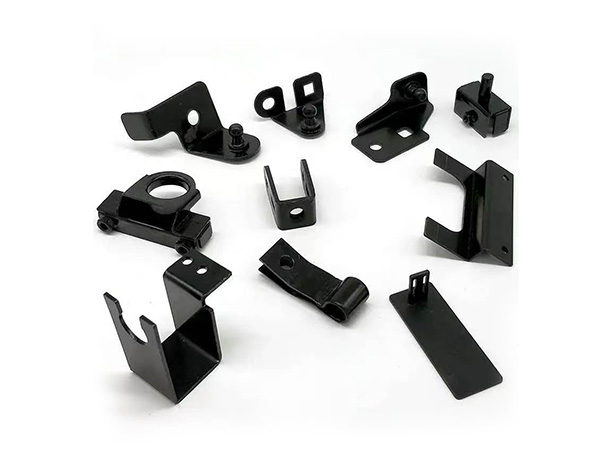
aluminum alloy is a widely adopted premium material for stamped server chassis, rack enclosures, internal mounting brackets, heat dissipation frames and shielding covers. With integrated stamping processes including blanking, bending, flanging, punching, embossing and deep drawing, manufacturers can produce complete lightweight server shell assemblies from 5052, 6061 and 6063 aluminum alloy sheets and strips. Aluminum alloy stampings have gradually replaced traditional cold-rolled steel server chassis in high-end data center, cloud computing and industrial server scenarios due to unique multi-dimensional advantages.
1. Core advantages of aluminum alloy server stampings
(1) Outstanding lightweight property
Aluminum density is only one-third of carbon steel. An aluminum stamped server chassis reduces overall equipment weight by 40%–55% compared with steel counterparts. It lowers the bearing load of server racks, facilitates manual handling and equipment transportation, and reduces the structural load-bearing requirements of data center cabinets. This advantage is prominent for large-scale stacked server clusters.
(2) Excellent thermal conductivity for heat dissipation
Aluminum alloy delivers far superior heat transfer performance than steel. Stamped aluminum chassis shells, integrated heat sink brackets and side panels quickly conduct internal heat generated by CPUs, power supplies and memory modules outwards. It optimizes the overall air convection of the server, reduces local hot spots, stabilizes component operating temperature and extends the service life of electronic hardware. Many server manufacturers design stamped rib structures on aluminum panels to expand heat dissipation areas.
(3) Natural corrosion resistance
Aluminum spontaneously forms a dense inert alumina film on its surface without extra thick anti-rust coating. Aluminum stampings resist oxidation, moisture and slight chemical erosion in air-conditioned data center environments. After anodizing or passivation treatment, they can pass long-hour salt spray tests, effectively avoiding rust spots that plague bare steel chassis during long-term operation.
(4) Electromagnetic shielding performance
Properly thickened stamped aluminum panels provide reliable EMI shielding, blocking external electromagnetic interference from disturbing internal server signals, and preventing high-frequency signals inside the server from leaking outward. This meets strict electromagnetic compatibility (EMC) standards for communication and storage servers.
(5) Good stamping formability and integrated forming
5052 aluminum alloy has excellent cold plasticity, supporting complex integrated stamping of one-piece chassis frames, folded edges, positioning bosses and cable management clamping structures. Progressive die stamping realizes mass automated production, reduces assembly splicing gaps and welding procedures, and improves chassis structural flatness and dimensional consistency.
(6) Premium surface decorative performance
Aluminum alloy stampings support diversified post-treatment: brushed finishing, mirror polishing, hard anodizing in black, silver or grey colors, sandblasting and micro-embossing logos. Compared with painted steel chassis, anodized aluminum has scratch-resistant, non-peeling surface texture, fitting the high-grade appearance demands of enterprise-level servers.
(7) High recyclability and low carbon
Aluminum can be nearly 90% recycled with low energy consumption during remelting. Mass scrap generated in the stamping workshop can be fully reused, helping data center brands meet energy-saving and carbon-neutral production requirements.
2. Applicable aluminum alloy grades for server stampings
5052 aluminum alloy: The most mainstream choice, balanced ductility, moderate strength, ideal for large chassis outer panels, side covers and cabinet frames.
6061 aluminum alloy: Higher tensile strength, used for load-bearing internal mounting brackets, fixed supports and heavy-duty server reinforcing frames.
Thin 1050 pure aluminum: Applied for thin shielding sheets and flexible conductive lining stampings inside the server.
3. Limitations and matching solutions
Higher raw material cost than cold-rolled steel: Suitable for mid-to-high-end servers; cost-sensitive entry-level equipment still chooses galvanized steel stampings.
Lower hardness than steel: Add stamped reinforcing ribs and flanged edges to improve rigidity and avoid panel vibration deformation during long-term equipment operation.
Poor spot welding performance: Adopt riveting, screw assembly or conductive adhesive connection instead of welding for assembly.
4. Typical aluminum alloy server stamping parts
Whole machine chassis shells, front/rear panels, side heat dissipation covers, hard disk mounting brackets, power supply fixed frames, EMI shielding gaskets, cable management clips, rack slide rail supports, cooling air guide frames.
1. GBT National Standard Citation
GB/T 19520-2014, Electromagnetic shielding technical requirements for electronic equipment enclosures[S]. Beijing: China Standards Press, 2014.
2. APA 7th Edition
Wu, J., & Tan, H. (2024). Application of stamped aluminum alloy shells in high-performance server equipment. Journal of Materials Science & Technology, 176, 142–154.
3. MLA 9th Edition
Wu, Jun, and Hao Tan. "Application of Stamped Aluminum Alloy Shells in High-Performance Server Equipment." Journal of Materials Science & Technology, vol. 176, 2024, pp. 142–154,

- Bazhou Yishun Machinery Parts Co., Ltd
- Contact:Mr Zhao
- Email: ziyangzhao96@gmail.com
- Add: Zhaojiazhuang Village, Bazhou Town, Bazhou City, Langfang City, Hebei Province, China

Copyright © 2026-2027 Bazhou Yishun Machinery Parts Co., Ltd All Rights Reserved