How are precision metal stamping parts manufactured?
Author:Yishun Time:2026-06-17 22:30:46 Number of views:175Second-rate
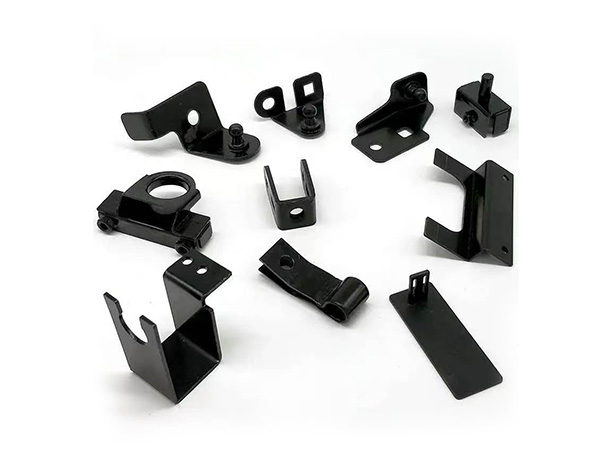
The whole manufacturing workflow of precision metal stamping parts consists of six core stages: drawing review & mold development, raw material preparation, trial stamping sampling, formal mass stamping, post-processing finishing, and quality inspection & packaging. Every step adopts strict precision control to ensure micron-level dimensional accuracy, smooth burr-free surfaces and stable batch consistency, which distinguishes precision stamping from ordinary low-precision sheet metal processing.
The first stage is technical confirmation and precision mold fabrication. Engineers analyze customers’ 2D/3D drawings, tolerance requirements, material characteristics and forming complexity to design progressive compound dies, which integrate blanking, punching, bending, embossing and cutting stations into one set of molds. High-hardness die steel is processed via CNC milling, wire EDM and surface grinding to guarantee tiny die clearance; this directly determines the dimensional stability and edge quality of finished stampings. After mold assembly, repeated test runs and parameter adjustments are carried out to eliminate deformation, burrs and dimensional deviation before official sampling.
Second comes raw material pretreatment. Qualified metal coils (brass, beryllium copper, stainless steel, aluminum alloy or thin carbon steel) are delivered to automatic leveling machines to remove internal stress and flat out warped sheets. Oil cleaning and dust removal follow to prevent scratches, indentations or impurities that would damage the precision surface during forming. Material thickness, hardness and surface finish are fully inspected to screen out defective coils that cannot meet tight tolerance standards.
Third is small-batch trial production and sample validation. Leveled metal strips are fed into high-speed precision stamping presses with closed-loop positioning systems. Each forming station executes one process step sequentially: first punching positioning holes for repeated accurate alignment, then blanking outlines, multi-angle bending, deep drawing or rib embossing. Operators measure samples with micrometers, height gauges and optical projectors to check hole position, thickness, bending angle and overall dimensions. If tolerance exceeds the required range, molds are trimmed or stamping speed and pressure are modified until samples fully match client specifications for formal approval.
Fourth is automated mass production with real-time precision monitoring. Approved molds are mounted on servo precision stamping equipment with constant feeding accuracy within ±0.01 mm. Continuous coil feeding realizes uninterrupted high-volume production, while built-in sensor systems detect material jamming, die wear and dimensional drift in real time. For ultra-precision electronic components, low-speed stable stamping mode is adopted to avoid elastic rebound and deformation of thin elastic metal sheets like phosphor bronze.
Fifth covers multi-step post-finishing treatments to meet functional and anti-corrosion demands. Deburring is mandatory for precision parts; vibration grinding, ultrasonic cleaning or high-pressure airflow deburring removes tiny edge burrs without altering dimensional tolerances. Next are customized surface treatments: tin plating, nickel plating, gold plating for conductive terminals, anodizing for aluminum parts, passivation for stainless steel, and electrophoretic coating for structural steel stampings. All plating thickness is precisely controlled to avoid assembly interference. Additional processes such as tapping, assembly of auxiliary fittings and flatness correction are completed as required by drawings.
The final stage is full dimensional inspection and dust-free packaging. Each batch undergoes sampling or 90% full inspection using optical measuring instruments and micrometers to verify all tolerance indicators, flatness, surface appearance and plating quality. Unqualified products are sorted out and reworked. Certified precision stampings are packed in anti-static bags, foam trays or customized plastic boxes to prevent scratching, extrusion and oxidation during transportation before delivery to customers.
In summary, precision metal stamping relies on high-precision mold design, automated servo stamping equipment, standardized post-processing and rigorous multi-layer inspection. This complete closed-loop manufacturing system ensures that customized precision stampings maintain consistent high accuracy for electronics, new energy, automotive and medical precision equipment.
APA 7th Edition
Zhang, L. (2026). Complete manufacturing process and precision control of precision metal stamping parts. Advanced Sheet Metal Engineering.
MLA 9th Edition
Zhang, Lei. "Complete Manufacturing Process and Precision Control of Precision Metal Stamping Parts." Advanced Sheet Metal Engineering, 2026.
GBT 7714-2015
Zhang Lei. Complete manufacturing process and precision control of precision metal stamping parts [J]. Advanced Sheet Metal Engineering, 2026.

- Bazhou Yishun Machinery Parts Co., Ltd
- Contact:Mr Zhao
- Email: ziyangzhao96@gmail.com
- Add: Zhaojiazhuang Village, Bazhou Town, Bazhou City, Langfang City, Hebei Province, China

Copyright © 2026-2027 Bazhou Yishun Machinery Parts Co., Ltd All Rights Reserved