How factory makes custom non-standard stamping parts?
Author:Yishun Time:2026-06-17 22:41:46 Number of views:136Second-rate
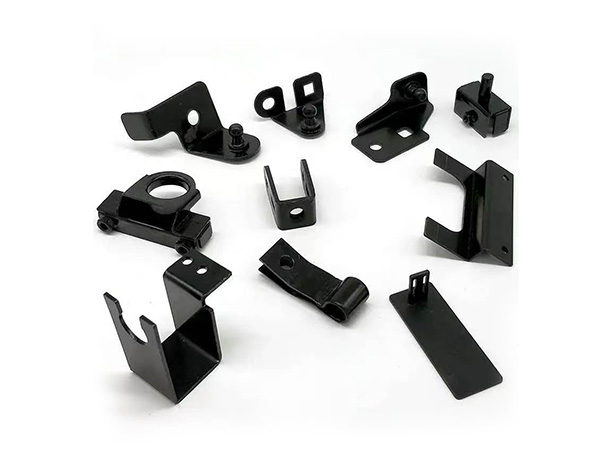
Custom non-standard metal stamping parts refer to special structural components that do not match standard sizes or public mold specifications, tailor-produced strictly according to customers’ unique 2D/3D drawings, sample requirements and special operating conditions. The whole production flow is highly customized, covering technical communication, independent mold development, trial verification, mass forming, targeted post-treatment and exclusive quality testing, which is completely different from standardized ready-made stamping goods.
The first step is in-depth technical docking and drawing review between engineers and clients. Customers submit engineering drawings, physical samples or functional demands, marking clear dimensional tolerances, material grades, plate thickness, load requirements, surface treatment standards and assembly matching limits. Professional stamping technicians check structural rationality: identify hard-to-form bending, deep drawing dead angles, thin vulnerable areas and unreasonable tolerance settings. If structural defects that easily cause cracking or deformation exist, engineers put forward optimized revision suggestions for customer confirmation to reduce mold failure risk in later stages. Material selection is also finalized at this phase, matching brass, copper, aluminum, galvanized steel, carbon steel or stainless steel based on conductivity, anti-corrosion, lightweight and strength needs.
The core link of non-standard stamping production is independent custom mold development, the biggest difference from standard parts. Since no existing public mold can be reused, the factory designs a full set of dedicated single-station molds or progressive compound molds according to product structure. Mold core and cavity are processed with high-hardness die steel through CNC milling, wire electrical discharge machining and precision surface grinding to control tiny clearance suitable for the selected metal sheet. For complex multi-working procedure non-standard parts, integrated progressive dies are designed to finish punching, blanking, bending, rib embossing and cutting in one continuous feed, greatly improving consistency. After mold assembly, multiple empty test runs are carried out to adjust pressure, positioning distance and cutting gap before formal trial sampling.
Next is small batch trial production and sample approval. Qualified raw material coils are leveled, degreased and fed into precision stamping presses with the newly completed custom mold. A small number of prototype samples are produced, then fully measured with micrometers, optical projectors and height gauges to inspect all non-standard special dimensions, bending angles, hole positions and flatness. If dimensional deviation, burrs, springback or cracking occurs during forming, the mold is trimmed and polished repeatedly, and stamping parameters including stamping speed, feeding length and pressing force are modified until all indicators meet customer drawing standards. The confirmed trial samples are sent to clients for physical verification; mass production can only start after written sample approval.
After sample confirmation, formal customized mass production begins with whole-process monitoring. Automatic servo feeding equipment ensures stable feeding accuracy for irregular non-standard blanks. Operators record dimensional data every 30 minutes to track mold wear and prevent batch dimensional drift. For extra-large, ultra-thick or ultra-thin non-standard stampings, special stamping processes are adopted: thick structural non-standard auto brackets use high-tonnage hydraulic presses, while micro electronic non-standard shrapnels apply low-speed silent precision presses to avoid deformation.
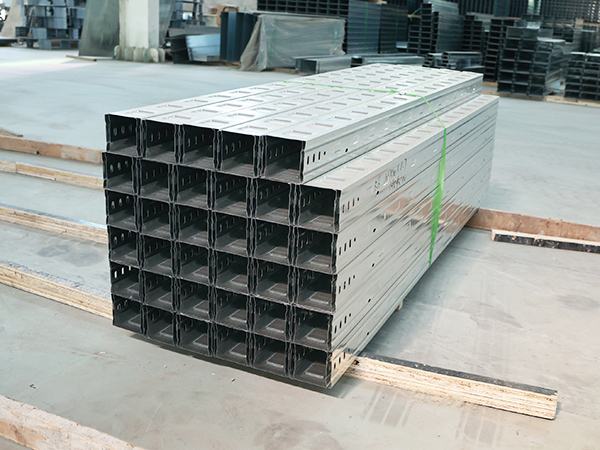
Subsequent post-processing is customized according to unique customer demands, rather than adopting unified standard procedures. Conventional deburring, ultrasonic cleaning and oil removal are completed first. Then exclusive surface treatment is arranged: gold plating for high-reliability signal terminals, heavy-duty hot-dip galvanizing for outdoor non-standard cable tray brackets, hard anodizing for special aluminum structural parts, blackening for carbon steel mechanical fittings, and customized passivation for anti-corrosion stainless steel components. Additional secondary machining such as tapping, riveting, bending correction and assembly of matched small accessories is also supported as requested by drawings.
The final stage is customized targeted quality inspection and personalized packaging. Unlike standard parts with fixed inspection items, non-standard stampings implement full inspection of all special dimensions marked on the customer drawing, focusing on unique assembly matching sizes and special functional indicators such as elasticity, conductivity and load capacity. Salt spray tests, fatigue elasticity tests and load deflection tests are conducted selectively according to service environments. Certified finished non-standard stampings are packed with anti-static bags, customized foam fixtures or separate cartons to avoid scratch and extrusion damage during transit, and labeled with exclusive part numbers for customer inventory management.
In conclusion, the manufacturing of custom non-standard stamping parts centers on one-to-one independent mold development and full-process personalized adjustment, from drawing optimization, dedicated mold making, repeated trial sampling to customized surface treatment and targeted inspection, to realize unique structural and functional requirements that standard stamping products cannot satisfy.
APA 7th Edition
Zhang, L. (2026). Customized development and whole manufacturing process of non-standard metal stamping parts. Custom Sheet Metal Manufacturing.
MLA 9th Edition
Zhang, Lei. "Customized Development and Whole Manufacturing Process of Non-Standard Metal Stamping Parts." Custom Sheet Metal Manufacturing, 2026.
GBT 7714-2015
Zhang Lei. Customized development and whole process manufacturing technology of non-standard metal stamping parts [J]. Customized sheet metal manufacturing, 2026.

- Bazhou Yishun Machinery Parts Co., Ltd
- Contact:Mr Zhao
- Email: ziyangzhao96@gmail.com
- Add: Zhaojiazhuang Village, Bazhou Town, Bazhou City, Langfang City, Hebei Province, China

Copyright © 2026-2027 Bazhou Yishun Machinery Parts Co., Ltd All Rights Reserved