How to check the quality of suspended ceiling keel accessories?
Author:Yishun Time:2026-06-21 14:41:49 Number of views:165Second-rate

Strict quality inspection of suspended ceiling keel accessories before procurement and installation directly avoids ceiling sagging, rust failure, loose connection and safety hazards in later construction. Quality testing covers raw material thickness, anti-rust coating, mechanical clamping strength, dimensional accuracy, processing workmanship and certification compliance. Both suppliers and construction contractors can adopt the following standardized inspection process to distinguish qualified galvanized/stainless steel fittings from low-grade thin electroplated products (Salkhordeha & Soroushian, 2025).
1. Visual Appearance Inspection (Quick on-site screening without tools)
Surface coating integrity
Qualified hot-dip galvanized accessories: Uniform silver-gray zinc layer, compact metallic luster, no exposed black steel substrate, no large white rust spots, bubbling or peeling coating. Minor matte texture is normal.
Stainless steel fittings: Smooth uniform metallic surface, no scratch streaks, acid pickling passivation layer without yellow discoloration.
Unqualified cheap products: Thin electroplated layer with uneven color, bare steel exposed at edges, flaky zinc peeling, obvious rust spots before installation.
Stamping and bending workmanship
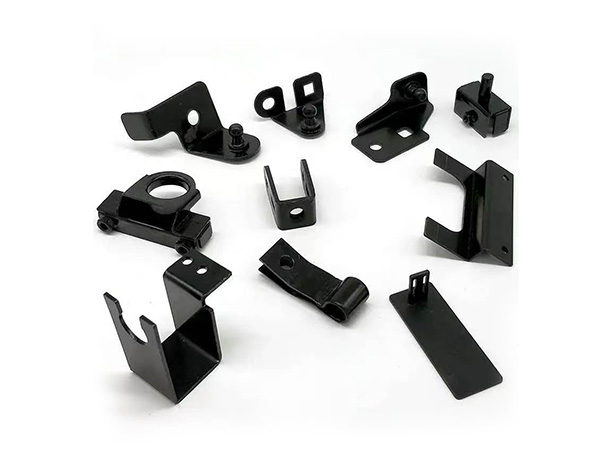
All bending edges of hangers, clips and connectors must be neat without cracks, burrs or breakage. Spring pieces should maintain natural rebound elasticity, not deformed or softened. Poor-quality accessories have irregular punching, cracked bending corners and loose springs that cannot lock keels tightly.
Uniform size consistency
Take random 5–10 pieces of the same accessory for visual comparison; the width, height and opening slot size should be consistent. Shoddy goods have large dimensional tolerances, resulting in poor matching with standard main and cross keels.
2. Thickness Measurement Inspection (Core index for load bearing)
Use a digital thickness gauge to test the steel substrate thickness of accessories, exclude coating thickness when measuring:
Conventional office engineering standard accessories: ≥0.7 mm galvanized steel
Fire-resistant, seismic and heavy-duty reinforced accessories: ≥0.9–1.2 mm thickened steel
Low-cost inferior products: 0.3–0.5 mm ultra-thin steel sheet, easy to bend and deform under slight pressure
Inspection tip: Press the clip side lightly by hand; thin inferior accessories will produce obvious bending deformation, while standard thick fittings stay rigid.
3. Anti-corrosion Coating Quality Test
Test 1: Zinc coating weight judgment for galvanized parts
Qualified hot-dip galvanized accessories reach Z180–Z275 coating weight (180–275 g/m²). Simple field test: Rub the surface hard with a rough cloth. If a large amount of zinc powder falls off, the galvanizing process is unqualified.
Electro-galvanized products only have 3–8 μm thin coating; slight friction will expose black steel.
Test 2: Salt spray corrosion test (lab standard inspection)
Qualified accessories pass 48–500 hours neutral salt spray test without red rust, depending on coating grade. Stainless steel 304 accessories can withstand over 500 hours salt fog test, suitable for coastal humid projects.
Test 3: Cut edge inspection
Cut a small section of the accessory with a grinder; qualified hot-dip galvanized forms a thick alloy zinc layer between steel substrate and outer zinc surface. Thin electroplated only has a thin surface film with no alloy transition layer.
4. Mechanical Performance & Clamping Strength Test
Spring locking performance test
Hook the clip onto the main keel and press the spring buckle. After locking, shake the clip hard by hand; it must not slide or fall off. Inferior springs lose elasticity after repeated opening and closing, leading to keel loosening.
Load-bearing tensile test for suspension hangers
Fix the U-hanger on a threaded rod and apply vertical load. Standard thickened hangers bear over 120 kg static load without bending or cracking. Thin cheap hangers deform under 40–60 kg load.
Splice connector firmness test
Assemble two keel sections with a splice accessory and pull horizontally; qualified joints have no separation gap and no deformation at the overlapping position.
5. Dimensional Matching Tolerance Inspection
Use a caliper to measure key dimensions against standard drawings:
Inner clamping width of main runner hangers (D38/D50/D60) error ≤±0.3 mm
Cross keel clip slot opening tolerance ≤±0.2 mm
Wall angle side length, splice overlap length meet design standards
Excessive dimensional deviation causes unstable clamping, keel dislocation and uneven ceiling surface after installation.
6. Raw Material Identification (Distinguish carbon steel, 304 and 316 stainless steel)
Galvanized carbon steel: Magnetic attraction is obvious with a magnet.
304 stainless steel: Slight weak magnetism or non-magnetic; suitable for general humid environments.
316 stainless steel: No magnetism, contains molybdenum element, resistant to chloride salt fog for coastal projects.
Professional inspection uses stainless steel test liquid to distinguish material grades accurately.
7. Document & Certification Quality Verification
Formal qualified keel accessory factories provide complete inspection certificates for batch goods:
Material thickness test report, zinc coating weight test sheet
Neutral salt spray anti-corrosion test report
Load-bearing mechanical performance test data
CE, ISO9001, SGS or UL certification for export projects
Goods without any test reports or certification documents are regarded as unqualified low-grade products with no quality guarantee.
8. Spot Check Sampling Standard for Bulk Orders
For container or large engineering batch procurement, follow random sampling rules:
Order quantity below 5,000 pieces: Randomly pick 20 pieces for full inspection
Order quantity 5,000–20,000 pieces: Randomly select 50 pieces from different cartons
Order over 20,000 pieces: Take 100 samples for thickness, coating and strength test
If more than 10% of sampled goods fail any single index, reject the whole batch.
Common Unqualified Quality Problems to Identify
Ultra-thin substrate leading to insufficient load bearing and easy deformation
Thin electroplated coating, fast rusting in humid spaces
Poor spring elasticity, unable to lock keels securely
Large dimensional tolerance, mismatched with standard keel systems
Cracked bending edges and brittle stamping parts that break during installation
Unlabeled raw materials, fake stainless steel mixed with ordinary iron sheets
Conclusion
Complete quality inspection of suspended ceiling keel accessories includes 7 core dimensions: visual appearance, substrate thickness, anti-rust coating, mechanical clamping strength, dimensional tolerance, raw material identification and certification documents. Purchasers and construction teams should prioritize thickness and galvanizing standard inspection on site; reject ultra-thin electroplated low-cost fittings to guarantee long-term structural safety of the entire suspended ceiling system.
APA 7th
Salkhordeha, M., & Soroushian, S. (2025). Seismic performance of suspended ceiling systems; A literature review. Structural Survey, 43(4), 412–435.
MLA 9th
Salkhordeha, Mojtaba, and Siavash Soroushian. "Seismic Performance of Suspended Ceiling Systems; A Literature Review." Structural Survey, vol. 43, no. 4, 2025, pp. 412–435,
GB/T 7714-2015
[1] SALKHORDEHA M, SOROUSHIAN S. Seismic performance of suspended ceiling systems; A literature review[J]. Structural Survey, 2025, 43(4): 412-435.

- Bazhou Yishun Machinery Parts Co., Ltd
- Contact:Mr Zhao
- Email: ziyangzhao96@gmail.com
- Add: Zhaojiazhuang Village, Bazhou Town, Bazhou City, Langfang City, Hebei Province, China

Copyright © 2026-2027 Bazhou Yishun Machinery Parts Co., Ltd All Rights Reserved