How to control flatness of thin stamping parts?
Author:Yishun Time:2026-06-17 22:31:31 Number of views:152Second-rate
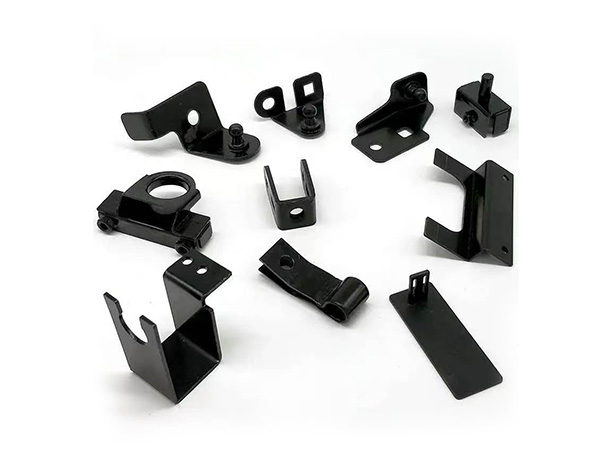
Thin metal stampings (0.1mm–1.5mm copper, aluminum, cold rolled steel, stainless steel sheets) are prone to warpage, wave deformation, arching and uneven flatness caused by uneven stamping stress, springback, blank holder force imbalance and material internal stress. Stable flatness control covers raw material pretreatment, stamping die optimization, forming process parameters, post-straightening and finished inspection control, which can keep flatness tolerance within ±0.02~±0.1mm according to customer requirements.
1. Raw material pre-processing control (source of internal stress)
Use stress-relieved leveling coil stock
Raw metal coils contain coiling residual stress. Select pre-leveled, stress-relieved thin strips from the material factory instead of ordinary unprocessed coils to reduce inherent warpage tendency.
Strict material thickness consistency
Ensure uniform sheet thickness; uneven thickness will generate inconsistent plastic deformation during stamping and cause partial bulging.
Proper material storage
Store thin metal sheets on flat horizontal pallet racks, avoid vertical stacking or long-term bending placement to prevent permanent pre-deformation before stamping.
2. Stamping die structural optimization (core control method)
Equip full-surface powerful blank holder with nitrogen gas springs
Uniform nitrogen spring pressure across the entire blank holder surface evenly compresses thin sheets during blanking and bending, eliminating local material loose waves. Avoid single small springs that lead to uneven clamping force.
Add integral leveling insert on die cavity
Design embedded leveling ribs or flat hardening inserts on upper/lower dies to apply slight uniform pressure on the workpiece surface during stamping, flattening micro waves while forming.
Optimize clearance between punch and die
Too large clearance stretches thin material unevenly and creates tensile stress warpage; too small clearance causes material extrusion deformation. Adopt precision small clearance matched to thin plate thickness (clearance = 5%~8% of sheet thickness).
Add trimming process after forming
For severely warped thin stampings, add a secondary flattening trimming station in progressive dies to shear uneven stress edges and release surface tension.
Avoid sharp right-angle bending on ultra-thin sheets
Sharp bends produce concentrated residual stress; design transition fillets ≥0.5t to disperse forming stress and reduce arching after ejection.
3. Stamping process parameter adjustment
Stable, balanced blank holder pressure
Test different nitrogen spring pressures to find the optimal clamping force: insufficient force leads to wrinkling and waves; excessive force causes sheet thinning and tensile warpage.
Low-speed stamping for ultra-thin parts
High-speed impact produces instantaneous uneven stress and shock deformation; reduce press stroke speed to ensure slow, steady forming.
Reasonable stamping lubrication
Apply thin, uniform stamping oil film. Excess lubricant creates local floating of thin sheets; insufficient lubrication leads to friction stress difference and surface ripples.
Optimize layout design
Arrange multiple workpieces symmetrically on one strip to balance material tensile stress on both sides; avoid single-side asymmetric blank layout that pulls sheets into arch shape.
4. Post-stamping flattening & stress relief processes
(1) Roller leveling machine straightening (mass production)
Continuous roller leveler with staggered upper/lower small rollers repeatedly bends thin stampings slightly forward and reverse to eliminate residual stress, greatly improving overall flatness. Suitable for batch thin copper, aluminum and steel sheets.
(2) Mold cold pressing flattening
Place finished thin parts between two high-precision flat steel plates, apply constant static pressure for 5–15 minutes to release stamping stress and correct slight warpage. Ideal for small precision electronic thin terminals.
(3) Low-temperature annealing stress relief (copper/aluminum conductive thin parts)
Heat thin copper/aluminum stampings to 150–220℃ for short-time heat preservation then slow cooling, which eliminates cold forming residual stress and permanently stabilizes flatness without changing dimensional accuracy. Not applicable to coated/plated parts.
(4) Vibration stress relief
Low-frequency vibration treatment disperses microscopic internal stress to prevent flatness drift during storage and assembly.
5. Handling, transfer and packaging anti-deformation control
Avoid manual bending during picking
Use suction cup fixtures instead of manual tweezers to grip thin stampings; clamping with hard tools easily creates indentations and local warpage.
Flat layered packaging
Separate each layer of thin stampings with flat hard cardboard; place finished parts horizontally in flat trays, never stack vertically at an angle.
Anti-warp storage
Finished thin stampings are stored under slight constant flat pressure before delivery to prevent rebound warpage caused by natural stress release.
6. On-line flatness inspection & real-time correction
Use flatness gauge, marble platform + feeler gauge or 2D optical detector to sample test flatness every production hour.
Once out-of-tolerance warpage appears, immediately adjust blank holder pressure, die clearance or add offline leveling process.
1. GBT National Standard Citation
GB/T 7743-2017, Forming and leveling technical conditions for metal sheets[S]. Beijing: China Standards Press, 2017.
2. APA 7th Edition
Chen, B., & Xu, L. (2024). Flatness control technology of ultra-thin sheet metal stamping components. Journal of Materials Processing Technology, 325, 118276.
3. MLA 9th Edition
Chen, Bo, and Lin Xu. "Flatness Control Technology of Ultra-Thin Sheet Metal Stamping Components." Journal of Materials Processing Technology, vol. 325, 2024, p. 118276,

- Bazhou Yishun Machinery Parts Co., Ltd
- Contact:Mr Zhao
- Email: ziyangzhao96@gmail.com
- Add: Zhaojiazhuang Village, Bazhou Town, Bazhou City, Langfang City, Hebei Province, China

Copyright © 2026-2027 Bazhou Yishun Machinery Parts Co., Ltd All Rights Reserved