Surface treatment of suspended ceiling keel accessories
Author:Yishun Time:2026-06-21 14:49:20 Number of views:125Second-rate
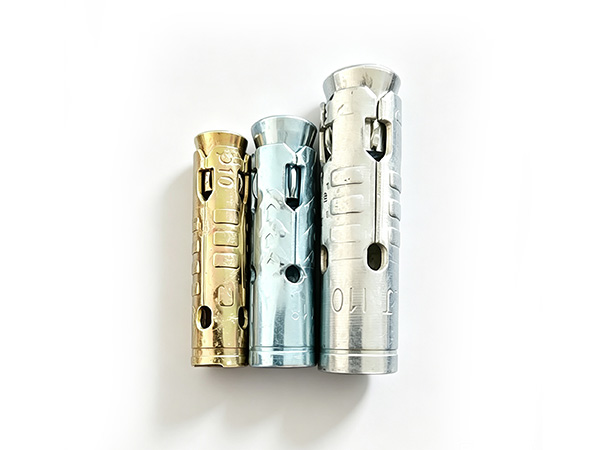
Surface treatment is the core anti-corrosion and protective process for all suspended ceiling keel accessories, directly determining rust resistance, service life, surface hardness and overall project acceptance qualification. Different treatment technologies match dry office, humid coastal, fire-resistant and high-end decorative scenarios. Improper or inferior surface coating will lead to rapid rust, coating peeling and early structural failure of hangers, clips and connectors within 1–3 years (Salkhordeha & Soroushian, 2025). Below systematically introduces mainstream surface treatment processes, technical parameters, advantages, disadvantages and applicable scenes.
1. Hot-dip galvanizing (Most widely used engineering standard treatment)
Process principle
Put stamped steel accessories into molten zinc liquid above 450°C for full immersion. Metallurgical alloy reaction forms three composite layers: iron-zinc alloy base layer + intermediate transition layer + pure zinc outer protective film. Zinc coating thickness reaches 60–100 μm, with Z180 / Z275 two mainstream coating weight grades (180g/m² and 275g/m² double-sided zinc). After galvanizing, passivation and sealing treatment are added to further improve anti-rust performance.
Advantages
Excellent sacrificial anode protection: Minor scratches expose steel substrate, surrounding zinc will corrode first to prevent base metal rust.
Strong impact resistance, not easy to peel off during transportation, bending and installation.
Meets EN 13964, ASTM C635 fire and building code requirements for commercial ceilings.
Low comprehensive cost, suitable for mass procurement of office, mall, school ceiling projects.
Disadvantages
Rough matte silver-gray surface, cannot be used for exposed decorative wall angles with high appearance requirements.
Cut drilling holes need supplementary cold galvanizing spray to seal bare steel edges.
Application scope
Standard hangers, furring clips, splice connectors, wall brackets for all dry indoor concealed gypsum and exposed T-grid ceilings; Z275 thick galvanized for fire-resistant, seismic and heavy-load projects.
2. Electro-galvanizing (Thin coating low-cost treatment for temporary decoration)
Process principle
Room-temperature electrolytic plating: accessories are placed in zinc salt electrolyte, thin zinc film (3–8 μm) is adsorbed on steel surface by current without alloy metallurgical bonding. No thick transition layer between zinc and steel.
Advantages
Low production cost, bright and smooth surface, uniform appearance.
Disadvantages
Ultra-thin coating with weak adhesion; slight friction, collision or scratch exposes black steel substrate and rusts rapidly.
No sacrificial anti-corrosion ability; once coating is damaged, rust spreads quickly.
Cannot pass neutral salt spray test for long-term engineering; banned for public fire-resistant and seismic buildings.
Application scope
Small short-term residential renovation, temporary construction site temporary ceilings, low-budget disposable decoration. Not recommended for commercial long-term projects.
3. Stainless steel passivation (304 / 316 stainless steel accessory surface treatment)
Process principle
Stainless steel itself contains chromium and nickel alloy elements. After stamping and forming, acid pickling + passivation treatment removes surface oxide scale and forms a dense self-repairing chromium oxide passive film without additional metal coating.
Advantages
Permanent anti-rust ability, scratches can regenerate protective film automatically when contacting oxygen.
Resistant to high humidity, chloride salt fog, weak acid and alkali; no need for supplementary anti-rust paint after cutting.
Smooth metallic matte surface, suitable for exposed decorative wall angles.
Disadvantages
High raw material and processing cost, 90%–180% higher price than hot-dip galvanized carbon steel accessories.
Application scope
Coastal seaside buildings, swimming pools, underground garages, basements, chemical workshops, medical and food plant ceilings with long-term humid and corrosive environment.
4. Powder coating / electrostatic spraying (Decorative colored surface treatment)
Process principle
After galvanizing base treatment, electrostatically adsorb epoxy or polyester powder paint on accessory surface, then bake at high temperature to form a dense colored protective film (white, black, gray, customized RAL color). Coating thickness 60–120 μm.
Advantages
Rich optional colors, smooth decorative surface, extra double-layer anti-corrosion protection based on galvanized substrate.
Disadvantages
High processing cost; collision during installation easily causes paint chipping, exposing inner zinc layer.
Application scope
Exposed visible wall angle brackets, decorative modeling ceiling special accessories for high-end hotels, exhibition halls and commercial lobbies.
5. Cold galvanizing spray (Supplementary local repair treatment, not mass production)
Not a factory batch surface treatment, only on-site repair auxiliary process. Used to spray cut edges, drill holes and scratch positions of hot-dip galvanized accessories after installation to seal exposed steel and avoid local rust.
6. Standard surface treatment acceptance criteria for qualified accessories
Hot-dip galvanized surface: Uniform silver-gray metallic luster, no black bare steel, no large white rust spots, bubbling, peeling or crack coating; minor crystalline zinc flower texture is allowed.
Stainless steel passivation surface: Smooth and clean, no yellow oxidation discoloration, no heavy scratch streaks.
Powder spraying surface: Uniform color, no missing spray, pinholes, sagging paint or exposed substrate.
Bending test standard: After bending accessories 90°, coating cannot crack or peel off; unqualified thin electroplated coating will peel off after slight bending.
Salt spray test requirement for export engineering: Formal commercial accessories must pass minimum 48h neutral salt spray without red rust.
7. Matching selection suggestions by project environment
Dry indoor office, supermarket, school: Z180 hot-dip galvanized accessories (cost-effective standard choice).
High-rise, fire-rated, seismic public buildings: Z275 thick hot-dip galvanized series.
Basement, restroom, swimming pool, coastal salt fog area: 304 stainless passivation treatment accessories.
High-end exposed decorative ceiling edges: Hot-dip galvanized base + customized color powder coating wall angles.
Temporary low-budget short-term decoration: Electro-galvanized fittings (not recommended for long-term use).
Conclusion
Hot-dip galvanizing Z180/Z275 is the mainstream standard surface treatment for most suspended ceiling keel accessories, balancing anti-corrosion performance and engineering cost. Electro-galvanizing is only limited to temporary decoration. Stainless steel passivation solves anti-rust demands of high-humidity and corrosive environments, while powder spraying serves decorative exposed fittings. Select matched surface treatment solutions according to project humidity, service life requirement, fire/seismic standards and decorative appearance demands to avoid premature rust and rework losses.
APA 7th
Salkhordeha, M., & Soroushian, S. (2025). Seismic performance of suspended ceiling systems; A literature review. Structural Survey, 43(4), 412–435.
MLA 9th
Salkhordeha, Mojtaba, and Siavash Soroushian. "Seismic Performance of Suspended Ceiling Systems; A Literature Review." Structural Survey, vol. 43, no. 4, 2025, pp. 412–435,
GB/T 7714-2015
SALKHORDEHA M, SOROUSHIAN S. Seismic performance of suspended ceiling systems; A literature review[J]. Structural Survey, 2025, 43(4): 412-435.

- Bazhou Yishun Machinery Parts Co., Ltd
- Contact:Mr Zhao
- Email: ziyangzhao96@gmail.com
- Add: Zhaojiazhuang Village, Bazhou Town, Bazhou City, Langfang City, Hebei Province, China

Copyright © 2026-2027 Bazhou Yishun Machinery Parts Co., Ltd All Rights Reserved