What is ceiling hanger accessory?
Author:Yishun Time:2026-06-21 14:47:39 Number of views:159Second-rate

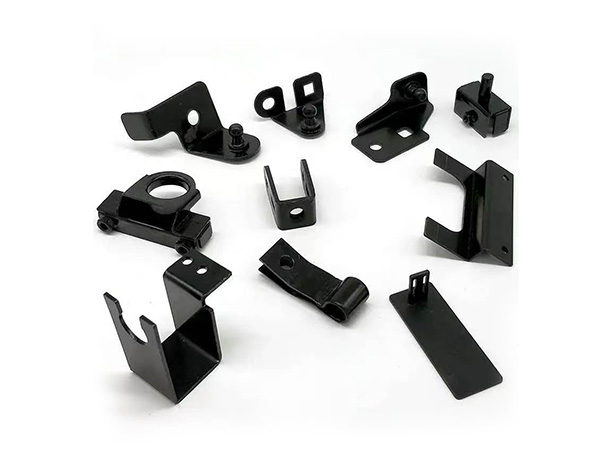
Ceiling hanger accessories, also known as U-type main runner hangers or suspension brackets, are the core load-bearing metal fittings that connect threaded suspension rods and main keels, transferring the full weight of the entire suspended ceiling framework to the concrete floor slab. As the primary force-bearing component of the whole ceiling system, its structural strength, anti-rust performance and locking design directly determine long-term ceiling safety. Inferior hangers will deform, slip or break under load, triggering sagging or collapse risks (Salkhordeha & Soroushian, 2025).
1. Basic Composition & Working Principle
A complete ceiling hanger assembly includes three matched parts:
U-shaped metal hanger body: The main clamping part with an open U groove to wrap the flange of main runners; reserved slot for installing anti-drop spring clips.
Double lock nuts + flat washers: Clamp the hanger tightly from upper and lower sides of the threaded rod to fix height and prevent vertical sliding.
Anti-drop spring clip: Secondary safety lock inserted into the hanger’s side notch to stop main keels from slipping out under vibration, thermal expansion or minor earthquakes.
Working logic:
Expansion bolts fix threaded rods to the overhead slab; the U-hanger is sleeved on the rod and locked by double nuts; the main keel is embedded into the U groove, forming a stable vertical suspension structure to bear main runners, cross keels, ceiling panels, lamps and ventilation equipment.
2. Main Classification by Ceiling System
1) Concealed light steel keel hangers (for gypsum board ceilings)
Classified by matching main runner width:
D38 hanger: Fits 38mm standard light main keel, thickness 0.7–0.9mm for ordinary office dry ceilings
D50 hanger: Fits 50mm medium main keel, 0.8–1.0mm thick, widely used in most commercial projects
D60 heavy-duty hanger: Fits 60mm large-span main keel, 1.0–1.2mm thick, for fire-resistant, seismic and heavy-load ceilings with air ducts or large lamps
All three types adopt integrated stamping forming, with built-in spring clip slots for double anti-drop protection.
2) Exposed T-grid hangers (for 600×600 mineral fiber tile ceilings)
Special narrow U hangers matching 15mm / 24mm wide-face T-bar main tees, lighter weight than light steel hangers, simple hook structure for fast assembly and later tile maintenance.
3) Special customized hangers
Stainless steel hangers (304/316): For coastal, basement, swimming pool and other high-humidity corrosion-prone spaces
Reinforced thickened hangers: Local reinforcement for embedded heavy equipment
Lengthened adjustable hangers: For multi-layer stepped suspended ceilings with large vertical drop
3. Core Functions of Ceiling Hanger Accessories
Bear full ceiling load
It undertakes all dead weight of keels, gypsum boards, mineral tiles, lamps and air-conditioning components, and evenly transmits pressure to the concrete slab. A single qualified thickened hanger can withstand static load above 120kg.
Realize adjustable ceiling height
By rotating upper and lower lock nuts on the threaded rod, the vertical position of the U-hanger can be raised or lowered freely to unify the horizontal elevation of all main keels and guarantee overall ceiling flatness.
Lock main keels to avoid horizontal and vertical displacement
The U-shaped wrapping structure restricts left-right sliding of main runners; double nuts eliminate vertical up-and-down shifting. With matched spring anti-drop clips, it forms dual safety protection against keel detachment.
Match different building safety standards
Ordinary dry offices: Standard hot-dip galvanized hangers
High-rise & fire-rated projects: Thickened Z275 galvanized hangers with higher temperature resistance
Seismic zone buildings: Hangers supporting matched seismic lateral support brackets
Coastal humid environments: Corrosion-resistant stainless steel hangers
4. Material & Quality Distinction
Hot-dip galvanized hangers (mainstream engineering choice)
Steel substrate coated with thick alloy zinc layer, scratch-resistant, 15–25 years rust-free in dry indoor environments, cost-effective for large commercial projects.
304 / 316 stainless steel hangers
Natural anti-rust alloy material, self-repairing passive film on scratches, long service life in humid and salt-fog environments, higher procurement cost.
Inferior thin electroplated hangers
Ultra-thin steel sheet with thin zinc coating, easy bending and rusting within 1–3 years; spring elasticity fails quickly, posing hidden safety hazards, only suitable for temporary simple decoration.
5. Standard Installation Rules for Ceiling Hangers
Standard suspension spacing: 1200mm for ordinary light-load ceilings; 900mm for fire-resistant, seismic and heavy-load areas
Each hanger must install complete upper + lower lock nuts and anti-drop spring clips; single nut fixation is prohibited
Suspension rods longer than 1200mm must add anti-sway limit accessories to prevent horizontal swing
All hangers must keep vertical; inclined suspension will generate lateral tension and deform the keel grid
Common Risks of Unqualified Hangers
Ultra-thin substrate deforms under load, causing local ceiling sagging
Thin electroplated coating rusts rapidly in damp spaces, reducing bearing capacity
Missing anti-drop spring clips lead to main keel slipping off during long-term vibration
Poor dimensional tolerance cannot fully wrap main keels, resulting in unstable clamping
Conclusion
Ceiling hanger accessories are the primary suspension load-bearing fittings of the entire suspended ceiling system, connecting overhead threaded rods and main keels to support all ceiling weight, adjust horizontal elevation and provide anti-drop safety protection. Users shall select corresponding specifications of galvanized or stainless steel hangers according to ceiling type, load, humidity and building safety codes to guarantee long-term structural stability.
APA 7th
Salkhordeha, M., & Soroushian, S. (2025). Seismic performance of suspended ceiling systems; A literature review. Structural Survey, 43(4), 412–435.
MLA 9th
Salkhordeha, Mojtaba, and Siavash Soroushian. "Seismic Performance of Suspended Ceiling Systems; A Literature Review." Structural Survey, vol. 43, no. 4, 2025, pp. 412–435,
GB/T 7714-2015
[1] SALKHORDEHA M, SOROUSHIAN S. Seismic performance of suspended ceiling systems; A literature review[J]. Structural Survey, 2025, 43(4): 412-435.

- Bazhou Yishun Machinery Parts Co., Ltd
- Contact:Mr Zhao
- Email: ziyangzhao96@gmail.com
- Add: Zhaojiazhuang Village, Bazhou Town, Bazhou City, Langfang City, Hebei Province, China

Copyright © 2026-2027 Bazhou Yishun Machinery Parts Co., Ltd All Rights Reserved