Which metal is best for electronic terminal stampings?
Author:Yishun Time:2026-06-17 22:40:44 Number of views:153Second-rate
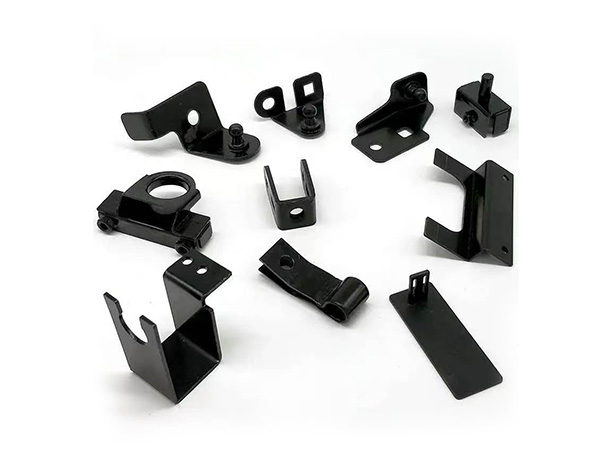
No single metal can be defined as universally optimal for all electronic terminals; the best material depends on service current, plug-in cycle times, working temperature, corrosion environment and cost budget. Brass, phosphor bronze, beryllium copper, pure copper and stainless steel are the five mainstream materials for electronic terminal stampings, each with distinct strengths for different application scenarios.
Brass (H62, H65, H70) is the most cost-effective and widely used base material for ordinary low-current electronic terminals. It balances good electrical conductivity, excellent ductility and low raw material cost, supporting complex stamping, bending and embossing without cracking. Brass terminals are suitable for consumer electronics, household appliance wiring terminals, low-voltage signal connectors and internal circuit contacts with plug-in cycles below 5000 times. Its natural oxidation layer will increase contact resistance, so surface plating with tin or nickel is essential to improve stability and anti-tarnish performance. For mass-produced civilian electronic products with tight cost control, brass is the top choice.
Phosphor bronze is the preferred material for medium-reliability elastic terminals, occupying the largest share of precision connector terminals. It retains decent conductivity while featuring outstanding fatigue resistance and stable elastic recovery after repeated plugging. Compared with brass, phosphor bronze can maintain constant contact pressure over tens of thousands of insertions and withdrawals without permanent deformation. It fits US B connectors, PCB spring terminals, sensor contact shrapnels, automotive low-voltage wire terminals and communication signal connectors that require long-term stable clamping force. Its moderate price balances performance and expenditure, making it the most versatile material for mid-range electronic terminal stampings.
Beryllium copper stands as the high-end choice for high-cycle precision terminals demanding ultra-stable elasticity. It boasts the highest yield strength and fatigue resistance among copper alloys, capable of withstanding over 100,000 plug-in cycles without spring relaxation. It maintains stable contact force under high and low temperature fluctuations, so it is widely adopted in aerospace connectors, medical equipment terminals, high-precision instrument contacts and high-frequency signal terminals. The main limitation is its relatively high material and processing cost, which restricts its use to high-reliability industrial and electronic devices rather than low-end mass consumer goods.
Pure copper (T2 / oxygen-free copper) focuses on maximum electrical conductivity, ideal for high-current power terminals rather than elastic contact shrapnels. Its extremely low resistivity minimizes heat generation under large current loads, so it is used for energy storage wiring terminals, new energy vehicle high-current terminals, power supply conductive lugs and busbar connection terminals. Pure copper lacks sufficient elasticity; it cannot bear repeated plug-in friction, so it is only applied to fixed crimping terminals without frequent disassembly.
Stainless steel (SUS301, SUS304) is rarely used for signal conduction terminals due to poor conductivity, but it serves special structural clamping terminals that require strong anti-corrosion and high mechanical rigidity. It is adopted for outdoor waterproof connector outer clamping shrapnels and terminals working in salt-fog, humid or chemical environments, where corrosion resistance takes priority over conductive performance.
To sum up the selection logic: brass for low-cost low-current terminals; phosphor bronze for general elastic signal connectors; beryllium copper for high-cycle high-precision reliable terminals; pure copper for high-current fixed power terminals; stainless steel for corrosion-resistant structural clamping terminals. Most finished electronic terminals are further electroplated with tin, nickel or gold to reduce contact resistance and enhance oxidation resistance.
APA 7th Edition
Zhang, L. (2026). Material selection and performance comparison of electronic terminal stamping parts. Electronic Component Manufacturing Technology.
MLA 9th Edition
Zhang, Lei. "Material Selection and Performance Comparison of Electronic Terminal Stamping Parts." Electronic Component Manufacturing Technology, 2026.
GBT 7714-2015
Zhang Lei. Material selection and performance comparison of electronic terminal stamping parts [J]. Electronic component manufacturing technology, 2026.

- Bazhou Yishun Machinery Parts Co., Ltd
- Contact:Mr Zhao
- Email: ziyangzhao96@gmail.com
- Add: Zhaojiazhuang Village, Bazhou Town, Bazhou City, Langfang City, Hebei Province, China

Copyright © 2026-2027 Bazhou Yishun Machinery Parts Co., Ltd All Rights Reserved