Why use brass for electronic stamping terminals?
Author:Yishun Time:2026-06-17 22:21:22 Number of views:115Second-rate
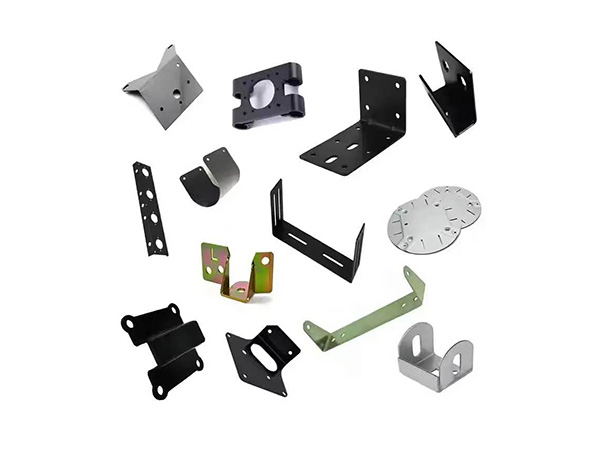
Brass (copper-zinc alloy) is the dominant raw material for mass-produced electronic stamping terminals, connectors, shrapnels and contact pins. Compared with pure copper, stainless steel, iron and phosphor bronze, brass balances electrical conductivity, stamping workability, elasticity, cost and surface treatment compatibility, fully matching the working demands of consumer electronics, automotive wiring harnesses, household appliances and communication equipment terminals. The core reasons for wide adoption are listed below:
1. Excellent electrical conductivity for stable signal & power transmission
Brass retains high conductivity far superior to steel and stainless steel. Low-resistance brass terminals minimize voltage drop and heat generation during current transmission. For low-current signal terminals in sensors, switches and circuit boards, brass guarantees clear signal transmission without signal attenuation. Although pure oxygen-free copper has higher conductivity, brass’s comprehensive mechanical properties make it more suitable for plug-in terminals that bear repeated friction.
2. Superior ductility and easy precision stamping
Brass features outstanding cold forming performance. It can undergo complex stamping processes including blanking, fine punching, multi-angle bending, embossing and micro-slit cutting without cracking. Manufacturers adopt high-speed progressive dies to stamp thousands of tiny integrated terminals per minute with stable dimensional consistency, meeting miniaturization trends of micro electronic connectors. Thin brass strips as thin as 0.1mm can be processed into ultra-small terminal shrapnels for wearable electronics.
3. Moderate elasticity and stable contact force after repeated plugging
Brass maintains proper elastic recovery after bending. Stamped terminal shrapnels made of brass keep consistent clamping force when mating with pins. Even after thousands of plug-unplug cycles, contact clearance will not loosen, avoiding open circuits or poor contact caused by vibration in vehicle and household electronic devices. Special high-elastic brass grades (H62, H65 brass) further optimize fatigue resistance for frequent-switch terminals.
4. Great corrosion resistance and anti-oxidation capacity
Brass naturally forms a compact oxide film to slow oxidation in normal indoor environments. It resists mild humidity and dust erosion better than bare cold-rolled steel terminals. After follow-up surface treatments such as tin plating, nickel plating or gold plating, brass terminals can pass 24–1000 hours neutral salt spray test, adapting to damp working environments of automotive electrical systems and outdoor communication modules.
5. Perfect compatibility with various surface plating processes
Brass substrates have strong coating adhesion. Tin plating is widely applied to brass terminals to enhance solderability for PCB welding; thin gold plating improves arc resistance for precision signal contacts; nickel plating acts as an intermediate barrier layer to prevent substrate diffusion. No peeling or bubbling occurs during electroplating, which cannot be guaranteed for iron or low-grade alloy materials.
6. Economical raw material cost for mass production
Brass raw material price is significantly lower than phosphor bronze, beryllium copper and pure copper. For large-batch general electronic terminals with ordinary elasticity requirements, brass greatly reduces overall component cost without sacrificing basic conductive and plug-in performance. It achieves an optimal balance of performance and cost for mass consumer electronics manufacturing.
7. Good machinability and easy post-processing
After stamping, brass terminals support fast deburring, trimming and automatic assembly. Burrs generated during punching are easy to remove by magnetic grinding or vibration tumbling. Brass also produces less wear to stamping dies compared with hard stainless steel, lowering die maintenance expense and improving continuous production efficiency.
1. GBT National Standard Citation
GB/T 2040-2017, Copper and copper alloy plates and strips[S]. Beijing: China Standards Press, 2017.
2. APA 7th Edition
Wang, Y., & Liu, J. (2023). Material performance analysis of brass stamped terminals for consumer electronic connectors. Materials Science and Engineering B, 296, 116624.
3. MLA 9th Edition
Wang, Yue, and Jun Liu. "Material Performance Analysis of Brass Stamped Terminals for Consumer Electronic Connectors." Materials Science and Engineering B, vol. 296, 2023, p. 116624,

- Bazhou Yishun Machinery Parts Co., Ltd
- Contact:Mr Zhao
- Email: ziyangzhao96@gmail.com
- Add: Zhaojiazhuang Village, Bazhou Town, Bazhou City, Langfang City, Hebei Province, China

Copyright © 2026-2027 Bazhou Yishun Machinery Parts Co., Ltd All Rights Reserved