How Keel Accessories Affect Ceiling Safety and Durability
Author:yishun Time:2026-11-07 21:23:46 Number of views:185Second-rate
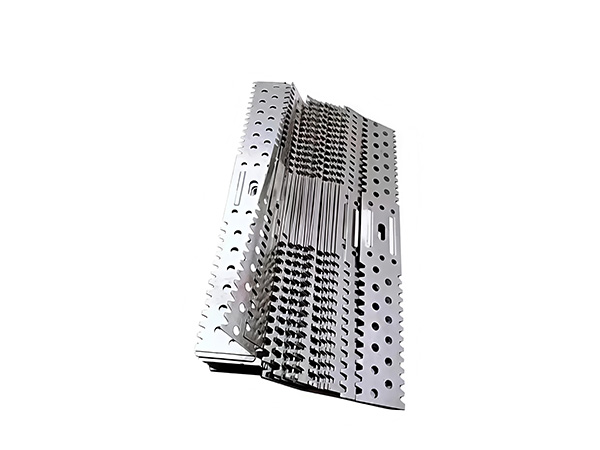
A suspended ceiling is often treated as a finish item, but it is a hanging structural system with real safety and durability responsibilities. The tiles may be the visible part, but the keel — the grid of main tees, cross tees, wall angles, hanger wires, and the small connectors and braces that hold it together — is what keeps the assembly level, secured, and capable of performing in a fire or a seismic event. The quality and specification of those accessories decide whether a ceiling merely looks right on day one or stays safe and intact for decades.
This article is written for architects, specifiers, contractors, and procurement teams sourcing metal fabricated components. It explains where safety and durability are won or lost in a keel system, the technical properties that matter, and what to put on a specification or purchase order.
Safety Starts With the Load Path
Every suspended ceiling carries a load: the tiles themselves (dead load) plus anything hung from the grid — lighting, sprinklers, diffusers, access loads (live load). That load travels tile → cross tee → main tee → hanger wire → slab. Safety depends on each link being correctly sized and engaged.
When accessories are under-specified or poorly made, the load path breaks down. A main tee with insufficient section modulus deflects and can fail; a hanger wire of the wrong gauge or a weak anchor point lets the grid drop; a cross tee that does not lock lets tiles pop out and fall. None of these are acceptable in a space where people work or walk beneath the ceiling.
Fire Safety — the Grid Is Part of the Assembly
In fire-rated constructions, the ceiling is not decorative; it is a barrier. The grid, its fixings, and its hangers must be part of the tested assembly to preserve the rated fire-resistance period.
Listed components. Only grid members and accessories that are part of the fire-test listing should be used in a rated ceiling. Substituting an unlisted tee or hanger can void the rating.
Penetrations and supports. How lights, sprinklers, and services are supported through the grid is governed by the assembly design. Accessories such as fire-rated hanger wires and compatible clips matter.
Test method awareness. Fire-resistance of building assemblies is evaluated by recognized standard test methods (for example ASTM E119 in the U.S. system). The project's design authority defines the required rating; the supplier must show the accessory is compatible with that tested system.
For large spaces, the piece on keel accessories for commercial buildings covers how load, fire, and acoustic demands combine in big installations.
Seismic and Lateral Restraint
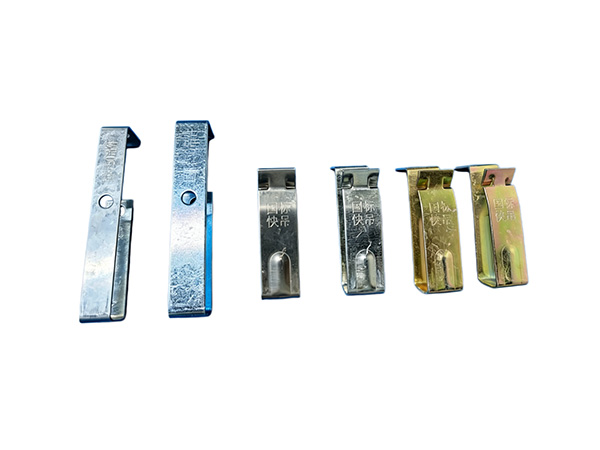
In many regions, building codes require suspended ceilings to resist lateral movement so they do not rack, collapse, or shed tiles during an earthquake or even strong HVAC-induced sway. This is where specific accessories earn their place:
Perimeter restraint. A continuous perimeter angle and restraint clips keep the grid edges from drifting away from the walls.
Cross and diagonal bracing. Bracing holds the grid square under lateral load and is often mandated by the seismic design category.
Positive-locking connections. Cross tees that lock firmly are far less likely to release tile during movement.
Omitting restraint to save time is one of the most common — and most consequential — shortcuts. It converts a code-compliant ceiling into a hazard.
Durability — What Determines Service Life
Safety is the ceiling's job on a bad day; durability is its job every day. Three mechanisms wear a keel system down:
Corrosion
Ceilings in humid, washed, or corrosive environments rust from the inside out. The base steel and its coating decide how long the grid keeps its load capacity. Galvanized sheet steel (zinc-coated by a recognized process, such as the hot-dip method covered by ASTM A653) is the common baseline; more aggressive environments call for heavier coating mass or alternative finishes.
Fatigue
Repeated live loads — maintenance access, airflow pulsation, minor shock — cyclically stress the grid and its fixings. Undersized members and loose connections develop cracks over time. Correct gauge, spacing, and bracing spread the load and slow fatigue.
Deflection and sag
Over time, excessive deflection reads as a wavy, unprofessional ceiling and can damage finishes and挂靠 services. A common design target is a deflection limit of L/360 of the hanger span for the ceiling plane, with tighter limits where sensitive finishes are involved.
Technical Properties to Specify
Durability is set at the specification stage. Put these on the document:
Base steel grade and coating. State the steel grade and the corrosion-protection system (e.g., galvanized to a specified coating mass), matched to the environment.
Load rating. Define dead load (tile weight) plus live/service load; the grid and hangers must be rated above the total.
Deflection limit. State the target (commonly L/360) so the supplier sizes tees and hanger spacing accordingly.
Fire compatibility. Require that grid and fixings are listed for the required fire-resistance rating.
Seismic restraint. Where applicable, specify perimeter restraint and bracing per the seismic design category.
Profile and module. Confirm tile module (600×600, 600×1200, 2×2, 2×4) and grid type (exposed, tegular, concealed) so accessories match.
The key factors for selecting keel accessories breaks these down further, and the installation best-practices guide shows how to install to the design intent.
How Poor Accessories Compromise Both
The failure modes overlap. A thin, ungalvanized main tee in a humid plant corrodes, loses section, deflects, and eventually cannot carry its load — a durability problem that becomes a safety problem. A cross tee that does not lock lets a tile fall during routine airflow — a safety event with no warning. Specifying quality accessories is therefore not a cost line; it is risk control.
Procurement Checklist
Plan dimensions, tile module, and exposure type.
Design load (dead + live) and required deflection limit.
Fire-rating and seismic requirements, if any.
Environment classification for coating choice.
Quantities with a wastage allowance for cuts and clips.
Requested documentation: material grade, coating specification, and — where relevant — fire-test listing.
Note on standards: Fire-resistance, seismic, and coating requirements differ by region and by building code. Confirm the applicable standard (for example local equivalents of ASTM E119 for fire testing or ASTM A653 for zinc coating) with the project's design authority before specifying.
FAQ
Can I use any keel accessory in a fire-rated ceiling?
No. In a rated assembly, the grid and its fixings must be part of the tested, listed system. Substituting unlisted components can void the fire rating. Require listing compatibility from the supplier.
Why does galvanizing matter for ceiling durability?
Ceilings in humid or corrosive spaces rust from the inside out, and corrosion reduces the steel's load capacity. A galvanized (zinc-coated) base steel, specified to a coating mass suited to the environment, preserves that capacity over the service life.
Is seismic restraint needed if we are not in an earthquake zone?
Seismic-rated bracing is code-required only in applicable zones, but perimeter restraint still helps resist everyday sway from airflow and access. It is good practice everywhere and mandatory where the code assigns a seismic design category.
What deflection limit should I specify?
A common target is L/360 of the hanger span for the ceiling plane, with tighter limits where finishes are sensitive. The design authority should set the final value per the applicable code.
Do accessories affect tile pop-out?
Yes. Cross tees with positive locking shoulders keep tiles seated under movement; loose or incompatible tees let tiles lift and fall. Locking geometry is a safety feature, not just a fit detail.
Conclusion
Ceiling safety and durability are not afterthoughts applied at installation — they are designed into the keel system through the accessories you choose. Load-rated tees and hangers protect against collapse, listed components preserve fire rating, restraint and bracing resist lateral movement, and galvanized, correctly gauged steel resists the corrosion and fatigue that quietly shorten service life. Specify the system as a system: state the load, deflection, fire, seismic, and coating requirements explicitly, demand matched and documented components, and the ceiling will be safe on the bad days and durable on all the others.
Technical References
Wikipedia — Drop ceiling (overview of suspended ceiling grid components and function).
ASTM International — astm.org (standards such as E119 for fire tests of building assemblies and A653 for zinc-coated steel sheet).
Occupational Safety and Health Administration (OSHA) — osha.gov (overhead and fall-hazard safety guidance for ceiling work).
The Fabricator — thefabricator.com (coverage of steel grade, coating, and formed-component quality).

- Bazhou Yishun Machinery Parts Co., Ltd
- Contact:Mr Zhao
- Email: ziyangzhao96@gmail.com
- Add: Zhaojiazhuang Village, Bazhou Town, Bazhou City, Langfang City, Hebei Province, China

Copyright © 2026-2027 Bazhou Yishun Machinery Parts Co., Ltd All Rights Reserved