How Metal Stamping Parts Are Manufactured Step by Step
Author:yishun Time:2026-08-02 19:23:36 Number of views:148Second-rate
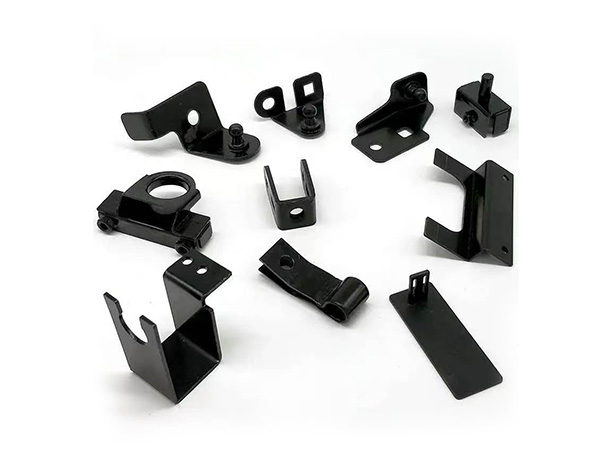
When a buyer at an automotive Tier-2 plant receives a carton of 50,000 metal stamping parts that all fit within ±0.05 mm, they rarely see the chain of decisions that made it possible. Having run stamping cells for over a decade, I can tell you the difference between a part that ships clean and one that gets rejected at incoming inspection is almost always made in the first three steps, not the last.
1. Material Selection and Coil Preparation
Everything starts with the coil. A metal stamping manufacturer typically stocks cold-rolled steel (DC01 through DC06), stainless 304 and 316, and aluminum 5052 or 6061 in thicknesses from 0.3 mm to 4.0 mm. Before anything touches the press, the coil goes through slitting or leveling so the strip feeds flat and true. We have measured edge wave as small as 1.5 mm over a 2 m length causing misfeeds at 200 strokes per minute, so coil flatness is not a detail, it is the foundation of the whole run.
2. Die Design and Tool Manufacturing
The progressive die is where engineering judgment lives. A toolmaker programs the strip layout, sometimes called the part nest, to minimize scrap while keeping the carrier strip strong enough to survive the final station. For a typical bracket, scrap runs 18 to 28 percent of the coil. Tightening that to 15 percent on a 1,000-ton annual program saves a metal stamping supplier real money and shortens lead time. Dies are built from D2 or SKD11 tool steel, hardened to 58 to 62 HRC, and the punch-to-die clearance is set at roughly 8 to 12 percent of material thickness.
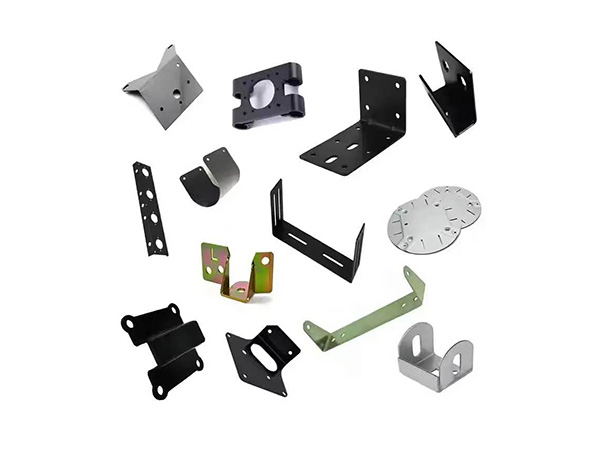
Setup is where theory meets the machine. The die mounts into a 200 to 800 ton high-speed press, and the feeder is tuned to the right pitch, the exact distance the strip advances per stroke. We run a First Article Inspection on the first 10 to 20 parts: every dimension is checked against the ballooned drawing, usually with a CMM. If a pierced hole is off by even 0.08 mm, the die gets shimmed or re-ground before a single production metal stamping part is banked.
4. Progressive Stamping on the Production Line
Now the cell runs. In progressive die stamping, the strip passes through stations, feed, pierce, form, bend, trim, and the finished part drops at the end while the skeleton keeps moving. A well-tuned line holds 120 to 400 strokes per minute. Sensors watch for double feeds and misfeeds; a jam at station four can wreck a $14,000 die in seconds, so the operator's job is mostly listening and watching, not touching. A reliable stamping manufacturer treats those sensors as non-negotiable, not optional extras.
5. In-Process Quality Checks
We do not wait for the end to check quality. At set intervals, every 50 to 250 parts depending on the program, an operator pulls a sample and checks critical features with pin gauges, go/no-go fixtures, or a handheld optical comparator. For a custom metal stamping shop serving medical or automotive customers, SPC charts track key characteristics so a drift shows up as a trend, not a recall. Cpk targets are usually 1.33 minimum, 1.67 preferred, and that number is what keeps a metal stamping parts factory honest under volume.
6. Deburring and Surface Treatment
Freshly stamped edges carry micro-burrs. Depending on the spec, parts go through tumbling, vibratory finishing, or hand deburring. Then comes the finish: zinc plating, powder coat, or passivation for stainless. A custom metal stamping supplier will match the coating to the environment, because salt-spray requirements of 48, 96, or 500 hours drive that choice. We have seen a 96-hour coating fail at 60 hours because the pretreatment rinse was dirty; process control matters as much as the chemistry in the tank.
7. Final Inspection and Packaging
Before cartons are sealed, a final audit confirms dimensions, finish, and count. Parts are nested in corrugated dividers or wound on reels for automated assembly lines. A good metal stamping parts factory labels every lot with a traceable batch number that links back to the coil heat and the die revision, because when a customer's line stops, they want answers in minutes, not days. That traceability is part of what a serious metal stamping manufacturer sells.
Conclusion
Manufacturing metal stamping parts is less a single operation than a disciplined sequence, material, die, setup, run, check, finish, pack. Each step protects the next. Buyers who understand this flow can ask better questions of their stamping supplier and spot the difference between a shop that merely stamps and one that engineers. The part in your hand is the visible tip; the real product is the process standing behind it.
Frequently Asked Questions
Q: How long does tooling take before production starts?
A: For a standard progressive die, expect 3 to 5 weeks from approved drawing to first samples, plus 1 to 2 weeks of trial and correction before the full run.
Q: What is a realistic minimum order for custom stamping?
A: Most suppliers set 5,000 to 10,000 pieces as a practical floor; below that, laser cutting or CNC may be cheaper despite a slower cycle time.
Q: Why does scrap percentage matter so much?
A: On high-volume programs, a 3-point scrap reduction can recover tooling cost within a year, so die layout efficiency is a core purchasing lever.
Q: Can stamping hold tight tolerances on thick material?
A: Up to about 3 to 4 mm steel, ±0.1 mm is routine; beyond that, secondary machining is usually needed for critical features.
References
Kalpakjian, S., & Schmid, S. R. (2021). Manufacturing Engineering and Technology (8th ed.). Pearson.
Altan, T., et al. (2020). Metal Forming: Fundamentals and Applications. ASM International.
Zhang, J., & Liu, D. (2020). Progressive Die Design for Automotive Stamped Parts. Journal of Manufacturing Processes, 56, 1234-1245.
Groover, M. P. (2020). Fundamentals of Modern Manufacturing (7th ed.). Wiley.

- Bazhou Yishun Machinery Parts Co., Ltd
- Contact:Mr Zhao
- Email: ziyangzhao96@gmail.com
- Add: Zhaojiazhuang Village, Bazhou Town, Bazhou City, Langfang City, Hebei Province, China

Copyright © 2026-2027 Bazhou Yishun Machinery Parts Co., Ltd All Rights Reserved