Metal Stamping Parts for Automotive Applications: A Guide
Author:yishun Time:2026-09-30 23:11:34 Number of views:170Second-rate
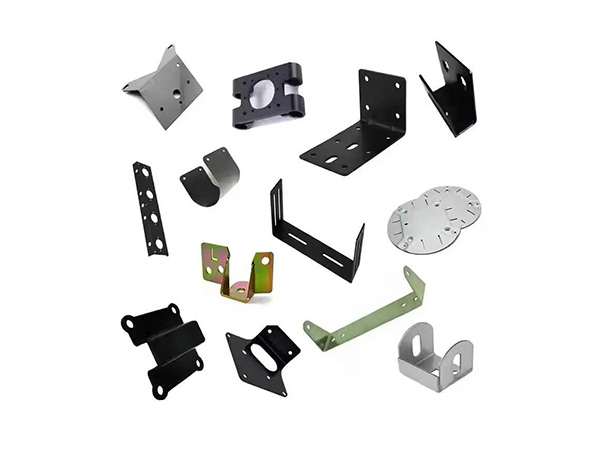
The modern vehicle is held together by stamped metal. From structural brackets to safety hardware and electrical terminals, metal stamping parts for automotive applications are produced by the millions with the consistency a moving assembly line demands. This guide reviews where stampings are used in vehicles, the materials and processes behind them, and the quality controls that separate a qualified automotive supplier from a general one.
Where Stamped Parts Sit in a Vehicle
Stampings appear wherever a small, precise, load-bearing shape is needed at volume. They are not the glamorous parts, but they are the ones that let the line move. Understanding the application categories helps buyers specify the right process and controls.
Body, Structural, and Closure Parts
Body-in-white brackets, seat rails, hinges, and reinforcement plates are typical automotive stamped parts. These carry load and often contribute to crash performance, so material grade and weldability matter as much as geometry. A bracket that looks simple may carry a demanding fatigue specification because it sees road load for the vehicle's whole life.
Safety and Restraint Hardware
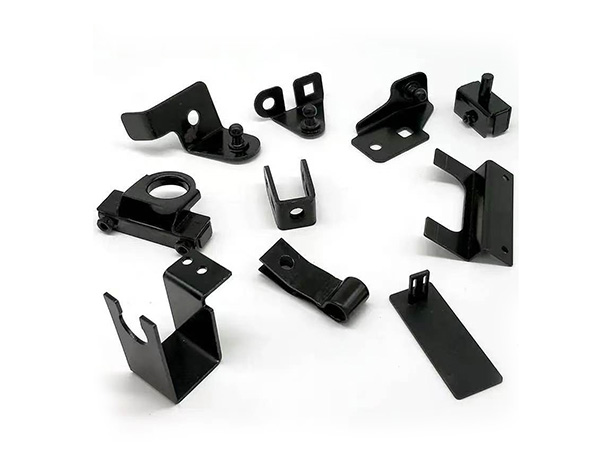
Seat latch plates, airbag housing brackets, and belt anchors are safety-related stampings with the strictest requirements. Here the part must perform on the first and only activation, which is why documentation and traceability are non-negotiable. A precision stamping manufacturer serving this segment treats every dimension as a monitored characteristic rather than a one-time check.
Powertrain and Electrical Components
Transmission plates, shielding, terminals, and connector frames are stamped from steel, stainless, and copper alloys. Electrical stampings push tolerance and edge quality to the limit because they carry current and must fit automated assembly. The shift to electrification is adding busbars and battery enclosure parts, which combine stamping volume with new conductivity and isolation requirements.
Materials Used in Automotive Stampings
Material choice follows the function. Mild and high-strength steels handle structure and closures; advanced high-strength steels reduce weight while keeping strength; stainless serves corrosion-exposed and under-hood parts; copper alloys serve electrical spring and conductivity.
Why Material Grade Drives the Process
Higher-strength steels spring back more after forming, which changes how the die must be cut and tuned. A metal stamping parts program that starts with the wrong temper risks a long correction cycle as the tool is adjusted to hold shape. Specifying the alloy and temper early, and confirming the supplier processes it routinely, avoids surprises once volume begins and the die is locked in.
Stamping Processes for Automotive Volume
Automotive volumes demand repeatable, fast production, and progressive die stamping is the default for smaller parts built station by station.
Progressive Die Stamping at Volume
In a progressive die, the strip advances and gains features at each station until a finished metal stamping part drops at the end. This suits the millions-of-pieces volumes a vehicle program expects, where every piece must fit the next station without sorting. Transfer and compound dies handle larger or simpler geometries, and the right supplier recommends the method that fits the part rather than forcing it into owned equipment. Deep drawing forms cups and enclosures such as sensor housings.
Quality Systems and Tolerances
Automotive supply runs to IATF 16949, which builds on ISO 9001 with added controls for traceability, change management, and defect prevention. Beyond the certificate, the practical question is capability.
Capability and Traceability
Routine metal stamping parts for automotive applications hold roughly ±0.05 mm, with tighter capability on critical features using ground tooling and monitoring. Buyers should ask for Cpk data, commonly 1.33 minimum and 1.67 on safety features, and for lot traceability back to the coil heat and die revision. That traceability is what lets a field issue be contained in minutes instead of a blanket recall. A supplier that quotes a tolerance but cannot show capability is a risk on a safety-relevant program.
First-Article and Production Consistency
A qualified supplier runs a First Article Inspection on initial parts, measures every dimension, and re-verifies after the die reaches operating temperature, because presses and tooling expand slightly in use. In production, statistical monitoring catches drift as a trend. For automotive stamped parts, this discipline is the difference between a steady supply and a stoppage that idles an assembly line costing far more per hour than the parts themselves.
Supplier Selection for Automotive Programs
When qualifying a metal stamping supplier for automotive work, weigh process capability, material range, in-house tooling, quality certification, and supply security. Ask how they handle a forecast swing, whether secondary operations are in-house, and how they manage dual-source risk. The lowest piece price loses its meaning if a late or rejected lot stops your line, so compare programs on delivered, capable, traceable supply rather than unit cost alone.
Electric Vehicle and Lightweighting Stampings
Electrification changes what gets stamped. Battery enclosures, busbars, and cell connectors add high-volume parts where conductivity and isolation matter as much as shape. Lightweighting pushes advanced high-strength steels and aluminum, both of which form with more springback and need tighter die tuning. A metal stamping parts supplier moving into EV work must handle these materials and the cleanliness their assembly demands. The result is that stamping's role in the vehicle is growing rather than shrinking, and programs that plan the process and material together avoid the late rework that comes from treating EV stampings as a simple variant of existing parts.
Design for Manufacture and Volume Economics
Stamping rewards parts designed for the process. Features that are easy to pierce and form, with generous radii and realistic tolerances, reduce tooling cost and scrap. A custom metal stamping partner who reviews the drawing early can often suggest changes that remove an extra station or a secondary operation, lowering the piece price across the program life. Volume drives the economics: tooling is amortized over the run, so the per-part cost falls as quantities climb into the millions that automotive expects. Below a few thousand pieces, machining may be cheaper, but for vehicle programs stamping is the default because the math only improves with scale. Specifying with the process in mind, rather than treating the drawing as fixed, is where most automotive stamping savings are found.
Secondary Operations and Supply
Many automotive stampings are not finished at the press. They may need welding, tapping, plating, or assembly with other components before they reach the line. Whether these steps are in-house or brokered affects lead time and hand-off risk. A metal stamping supplier that controls secondary operations keeps accountability with one partner and shortens the chain between your drawing and a ready part. For just-in-time automotive lines, that control matters as much as the stamping itself, because a part that is stamped on time but delayed in plating still stops the line. Confirm the full process scope, not just the forming step, when qualifying a supplier for production volume.
FAQ
Q: Which automotive parts are usually stamped rather than machined?
A: Brackets, rails, hinges, terminals, and shielding where volume is high and geometry suits forming; machining is reserved for low volume or complex 3D features.
Q: Why is IATF 16949 important for stampings?
A: It adds automotive-specific controls for traceability, change management, and defect prevention that general ISO 9001 alone does not require.
Q: What tolerance can automotive stampings hold?
A: Routine stamping holds about ±0.05 mm, with tighter capability on critical features supported by monitoring and ground tooling.
Q: How does electrification change automotive stamping?
A: It adds busbars and battery enclosures that combine high volume with conductivity and isolation needs, expanding the role of stamping in the vehicle.
Conclusion
Metal stamping parts for automotive applications span the body, safety systems, powertrain, and electrical hardware that make a vehicle function and stay safe. The work hinges on the right material and process, tight, monitored tolerances, and the traceability IATF 16949 demands. For a new or ongoing program, discuss your drawing and volumes with our metal stamping parts team to confirm the right process, tooling, and quality path.
References
Kalpakjian, S., & Schmid, S. R. (2021). Manufacturing Engineering and Technology (8th ed.). Pearson.
Groover, M. P. (2020). Fundamentals of Modern Manufacturing (7th ed.). Wiley.
ASM International. (2019). ASM Handbook, Volume 14B: Metalworking: Sheet Forming. ASM International.
IATF 16949:2016. (2016). Quality Management System Requirement for Automotive Production and Relevant Service Parts Organizations. IATF.

- Bazhou Yishun Machinery Parts Co., Ltd
- Contact:Mr Zhao
- Email: ziyangzhao96@gmail.com
- Add: Zhaojiazhuang Village, Bazhou Town, Bazhou City, Langfang City, Hebei Province, China

Copyright © 2026-2027 Bazhou Yishun Machinery Parts Co., Ltd All Rights Reserved