Surface Finishing Options for Metal Stamping Parts
Author:yishun Time:2026-10-13 16:48:16 Number of views:136Second-rate
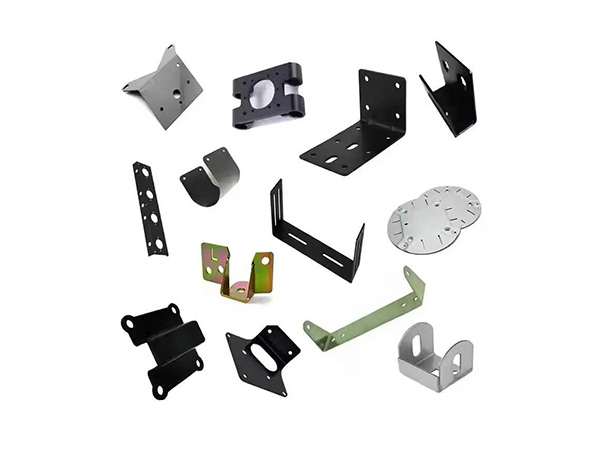
The base metal decides what a metal stamping part is, but the finish decides how long it lasts and how it looks. Corrosion, wear, conductivity, and appearance are all set at the finishing stage, and the choice shapes cost as much as performance. This article reviews the main finishing options for stampings and how to match them to the application.
Why Finish Choice Matters as Much as Material
A well-chosen steel grade fails early if its finish is wrong for the environment. Coastal air, outdoor exposure, and contact with dissimilar metals all attack unprotected surfaces. The finish is the barrier and, in some cases, the functional surface for contact or appearance. Selecting surface finishing for metal stamping parts is therefore a design decision that belongs in the drawing, not a late add-on. Getting the finish wrong is also hard to reverse once parts are made, because most finishing is applied to the completed stamping rather than built into it, so the choice made at design stage is the one the part lives with.
Zinc Plating for Corrosion Protection
Electroplated zinc is a common, economical corrosion shield for steel stampings, applied as a thin, even coating with good throw into recesses. It suits indoor and mild outdoor parts where appearance and threadability matter. Specifications such as ASTM B633 define zinc plating classes and thickness, which lets buyers compare suppliers on a common basis. The trade-off is that thin plating offers limited life in harsh, salty, or abrasive service, where a thicker coating performs better. Because plating follows the part's geometry, it is a good fit for stampings with holes and bends that a liquid coating would bridge, provided the service severity stays within the specified thickness class.
When to Choose Plating Over Coating
Zinc plating fits parts with threads, tight tolerances, or complex shapes where a liquid coating would build up unevenly or block a feature. For a metal stamping part that must keep dimensions and still resist corrosion, plating is often the cleaner choice than a film coating, provided the service is within the plating's protective range and the chromate conversion layer meets the required salt-spray expectation.
Powder Coating for Durability and Appearance
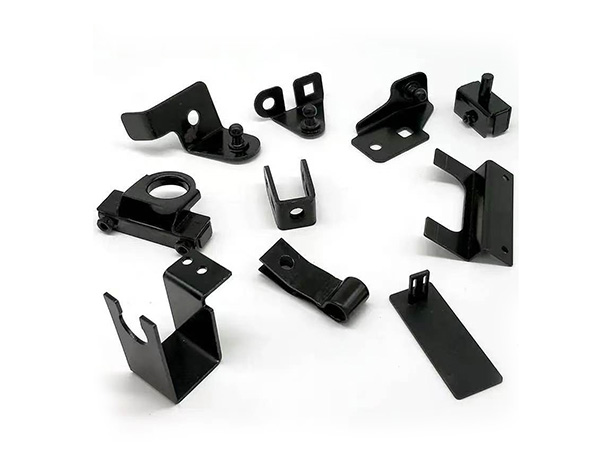
Powder coating applies a dry polymer film cured by heat, giving a thick, uniform, chip-resistant finish in a wide color range. It suits stampings where appearance and abrasion resistance matter, such as enclosures and visible brackets. The coating builds thickness, so it can hide minor surface marks, but it also changes dimensions and can bridge tight features, so the design must allow for the film. For metal stamping parts in harsh or UV-exposed service, powder coating often outlasts liquid paint and reads as a higher-quality finish. Cure temperature is a constraint for some stamped assemblies with inserts or heat-sensitive features, so the part's full build must be considered before specifying powder rather than a lower-temperature finish.
Hot-Dip and Electrogalvanizing for Steel
Hot-dip galvanizing immerses the part in molten zinc for a thick, rugged coating suited to outdoor and structural steel stampings, while electrogalvanizing deposits a thinner, smoother zinc layer better for formed or painted parts. References such as ASTM A123 cover hot-dip practice and coating thickness by steel mass. The thick coating of hot-dip gives long life in weather, at the cost of a rougher look and some dimensional change, whereas electrogalvanized steel arrives clean and formable for further finishing.
Anodizing for Aluminum Stampings
Anodizing grows a controlled oxide layer on aluminum that is hard, corrosion resistant, and able to take color. It is the standard finish for aluminum metal stamping parts in architectural, electronic, and visible applications, because it protects without adding a separate film that could peel. The process is tied to the alloy, so the drawing should name the aluminum grade, since some alloys anodize evenly and others show streaks that affect appearance. Specifying the alloy and the anodizing class together avoids the disappointed appearance that comes from an unspecified combination.
Passivation and Black Oxide for Stainless and Steel
Stainless stampings are often passivated to restore a corrosion-resistant surface after machining or forming, removing free iron that could initiate rust; this is a chemistry step rather than a coating. Black oxide gives steel a dark, low-reflective finish with mild corrosion resistance, favored for appearance and light-duty service. Neither replaces a heavy coating in aggressive environments, but both are useful, low-cost surface finishing steps where the part is mostly protected by its base material or sees mild conditions.
Tin and Specialty Plating for Electrical Contact
For electrical stampings, tin and similar soft platings provide solderability and low contact resistance, which is why terminals and connectors are often tin-plated. The finish here is functional, not just protective, and its thickness and purity affect performance in automated assembly. A metal stamping part carrying current should specify the plating by function, with the coating grade and thickness matched to the contact duty rather than chosen by price alone.
Pretreatment and Process Control
No finish performs without correct pretreatment. Cleaning and, for many coatings, conversion or phosphate steps decide how well the finish bonds and how long it lasts. A surface finishing process that skips or rushes pretreatment fails early, often as blistering or poor adhesion that no thickness can fix. Process control, bath monitoring, and salt-spray verification such as ASTM B117 give confidence that the finish meets its class. For metal stamping parts in demanding service, asking a supplier how they control pretreatment is as important as the coating name, because the hidden step is what determines field life.
Matching Finish to Environment and Budget
The right finish follows the environment: mild indoor use may need only plating or passivation; outdoor or corrosive service calls for galvanizing or a durable powder coat; electrical contact needs the right functional plating; appearance parts need anodizing or powder. Cost rises with coating thickness, pretreatment, and process control, so the choice balances life against budget. Specifying surface finishing for metal stamping parts by the actual exposure, rather than a default, avoids both premature failure and overspending on protection the part does not need.
Specifying Finish in Your RFQ
To get the right result, name the finish, the standard or thickness class, the salt-spray or service life expectation, and any color or appearance requirement. State whether the part is threaded or tight-tolerance, because that affects whether plating or coating is suitable. A metal stamping parts supplier who receives this detail can finish to a verified specification instead of guessing, which is what keeps the result consistent across batches and compliant with the part's duty.
FAQ
Q: When is zinc plating better than powder coating?
A: For threaded, tight-tolerance, or complex stampings where a thick film would build up or block features, plating protects without changing dimensions significantly.
Q: Does anodizing add a separate coating to aluminum?
A: No, it grows a controlled oxide layer in the alloy itself, so it protects without a film that can peel, but the alloy must suit the process.
Q: How do I specify a finish so suppliers quote fairly?
A: Name the finish, the standard or thickness class, the salt-spray or life expectation, and color, plus whether the part is threaded or tight-tolerance.
Q: Why does finish choice affect cost?
A: Thickness, pretreatment, process control, and the coating type all add cost, so matching the finish to real exposure avoids paying for protection the part does not need.
Conclusion
Surface finishing for metal stamping parts is where corrosion resistance, wear life, conductivity, and appearance are set, and the choice belongs in the design. Match zinc, galvanizing, powder, anodizing, passivation, or specialty plating to the environment and function, and specify it by standard and thickness so supply is consistent. The right finish protects the part for its service life at a sensible cost. To review finishing options for your drawing, discuss it with our metal stamping parts team.
References
ASTM B633-19. (2019). Standard Specification for Electrodeposited Coatings of Zinc on Iron and Steel. ASTM International.
ASTM A123/A123M-17. (2017). Standard Specification for Zinc (Hot-Dip Galvanized) Coatings on Iron and Steel Products. ASTM International.
ASTM B117-19. (2019). Standard Practice for Operating Salt Spray (Fog) Apparatus. ASTM International.
ASM International. (1994). ASM Handbook, Volume 5: Surface Engineering. ASM International.

- Bazhou Yishun Machinery Parts Co., Ltd
- Contact:Mr Zhao
- Email: ziyangzhao96@gmail.com
- Add: Zhaojiazhuang Village, Bazhou Town, Bazhou City, Langfang City, Hebei Province, China

Copyright © 2026-2027 Bazhou Yishun Machinery Parts Co., Ltd All Rights Reserved